The books become the bottleneck long before the business stops growing. One entity closes on a different schedule, another uses a different chart of accounts, and intercompany balances require manual cleanup before leadership can trust the consolidated view. If your team is still exporting QuickBooks files into spreadsheets, the problem isn't just inconvenience. It affects control, audit readiness, cash visibility, and the quality of decisions your CEO and board can make.
The right multi-entity accounting software depends on more than entity count. You need to assess legal-entity complexity, currencies, intercompany volume, reporting dimensions, industry requirements, Microsoft alignment, implementation scope, and total cost of ownership. Sage Intacct is the strongest starting point for many mid-market organizations because it combines consolidation, dimensional reporting, and intercompany capabilities in a focused cloud financials platform. The implementation partner matters just as much as the software. Lucentive, a Sage Intacct National Premier Partner, works with mid-market, healthcare, and nonprofit organizations to design a system finance teams can operate confidently. A short, no-pressure 30-minute working session can clarify whether Intacct fits before you commit to a platform or implementation path.
Table of Contents
- 1. Sage Intacct
- 2. Oracle NetSuite OneWorld
- 3. Microsoft Dynamics 365 Business Central
- 4. Acumatica Cloud ERP
- 5. Multiview ERP
- 6. Gravity Software
- 7. SoftLedger
- Top 7 Multi-Entity Accounting Comparison
- Choose the Platform You Can Operate Well
- Summary
- SEO FAQ
1. Sage Intacct
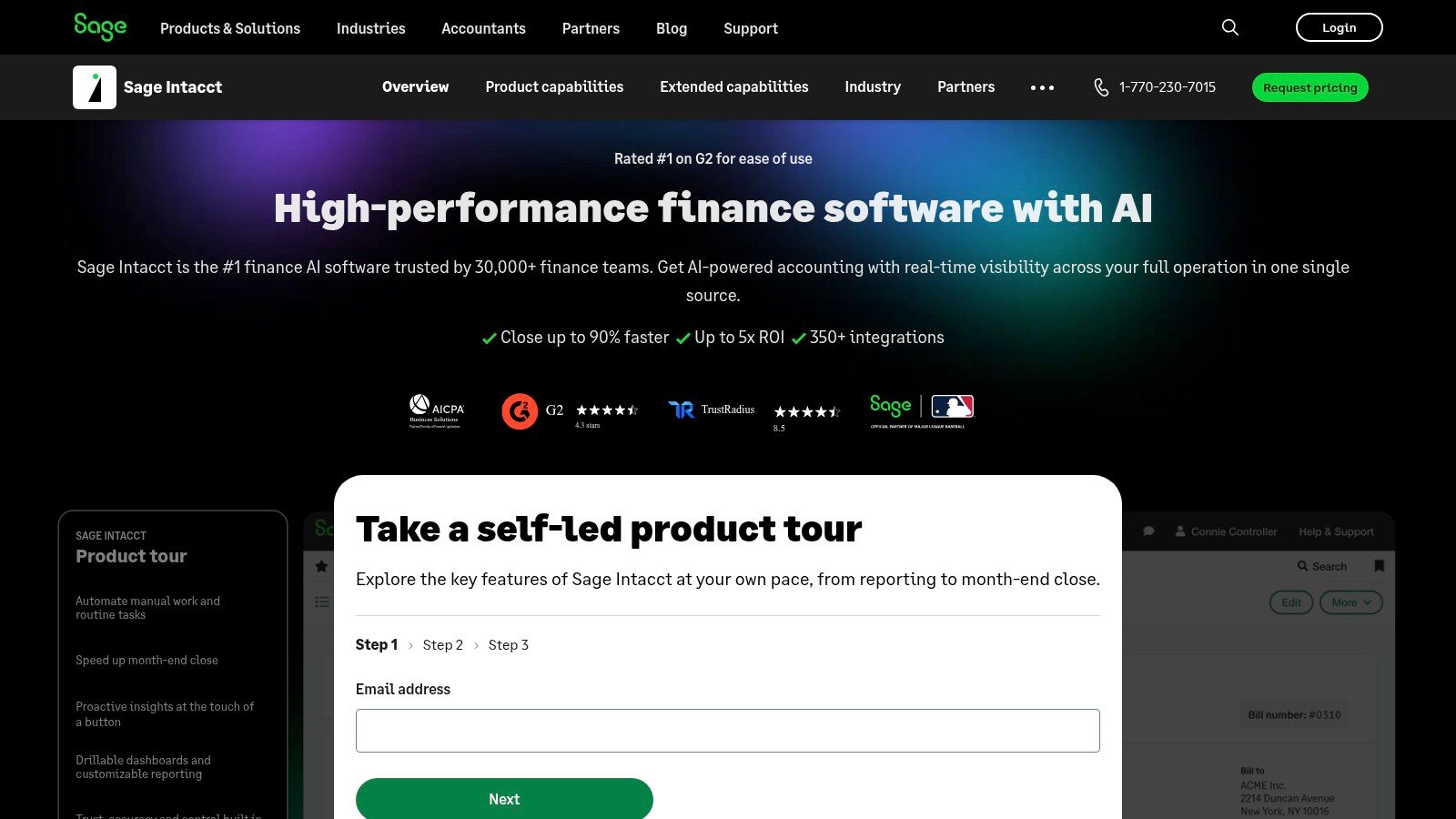
Sage Intacct is the best fit for a mid-market finance team that needs stronger control without taking on a broad operational ERP before it's necessary. Its core strength is financial management across entities, currencies, locations, funds, departments, and other reporting dimensions. That makes it particularly useful when the finance team needs a consolidated view but doesn't want to build an oversized chart of accounts to answer every management question.
The platform supports multi-entity consolidation, automated multi-currency consolidation, intercompany eliminations, and inter-entity entries. Finance leaders can access multiple entities through one login, drill from group-level results into underlying transactions, and create granular reports through dimensional general ledger design. The Sage Intacct platform is also relevant to healthcare, nonprofit, professional services, and multi-site organizations that need reporting by location, fund, grant, provider, project, or department. Buyers comparing cloud financial platforms often also review independent overviews from Gartner and accounting software research from G2.
Why mid-market finance teams start here
Sage Intacct's advantage is operational fit. You can keep legal entities distinct while standardizing the accounting structure that supports group reporting. That distinction matters. A department, clinic, fund, or project isn't automatically a separate legal entity, and treating every reporting need as a company creates unnecessary mapping and maintenance.
Healthcare-specific integrations, including EMRConnect, and nonprofit capabilities can reduce the need to force industry processes into generic financial structures. The platform also provides dashboards and drill-down reporting designed to replace delayed spreadsheet packages with more current financial visibility.
Practical rule: Use entities for legal ownership and dimensions for management reporting. That design decision often matters more than adding another module.
The trade-off is cost discipline. Pricing is quote-based and can grow as you add entities, modules, users, integrations, or advanced operational requirements. Inventory-heavy businesses may need add-ons or a broader ERP. Before signing, model the full operating cost, including implementation, data cleanup, integrations, training, and ongoing administration.
Lucentive's Sage Intacct reseller and implementation guidance is useful because software alone won't decide the right entity hierarchy or reporting model. Lucentive brings mid-market, healthcare, and nonprofit experience to those design decisions, helping leaders evaluate fit before they buy more capability than the organization can absorb.
2. Oracle NetSuite OneWorld
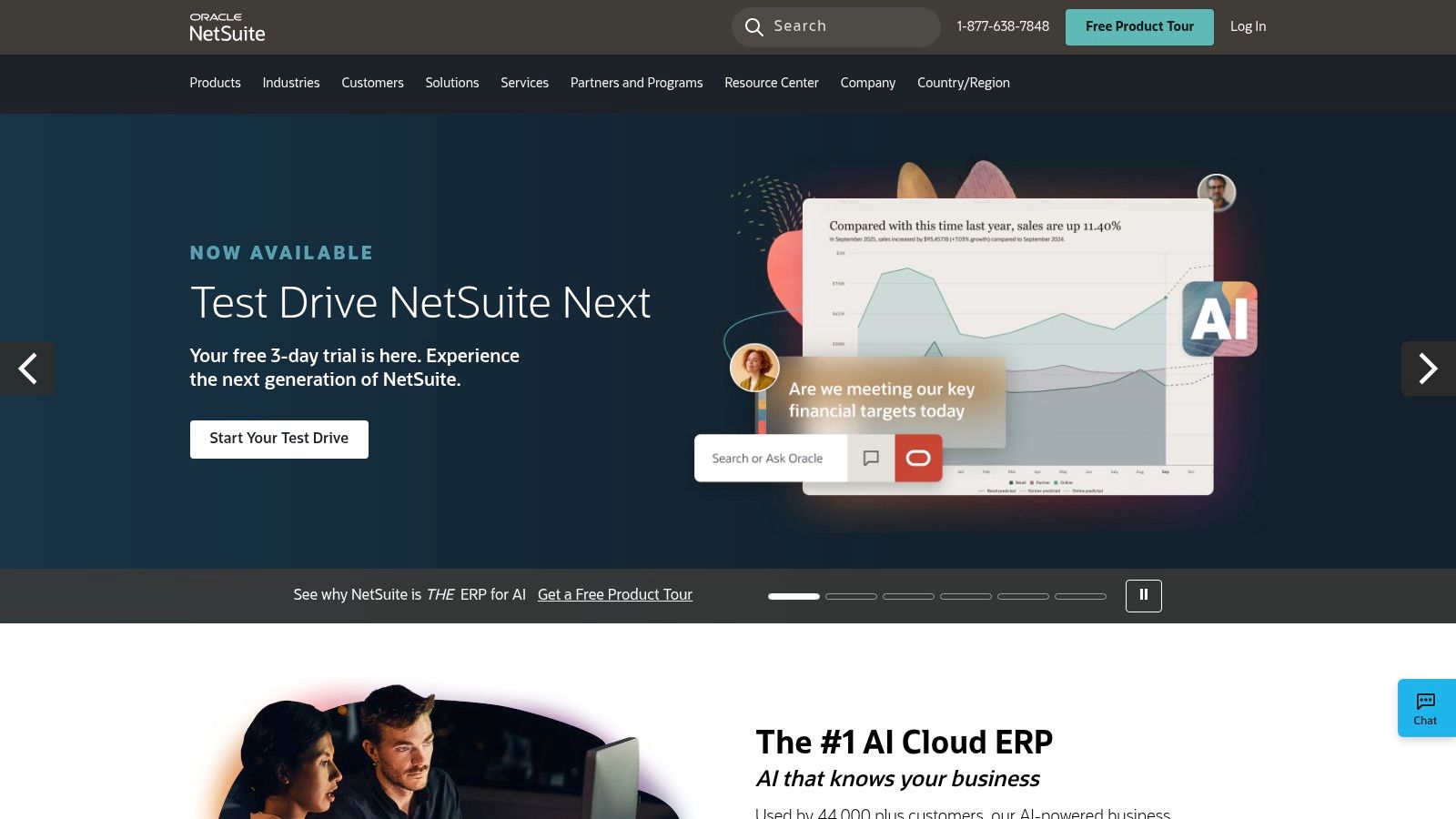
Oracle NetSuite OneWorld is the right choice when multi-entity accounting is part of a broader global ERP requirement. It is designed for organizations managing multiple subsidiaries, currencies, local compliance requirements, and complex legal structures. If the finance team expects the platform to support operational processes beyond core financials, OneWorld deserves serious consideration.
Its consolidation capabilities include multi-currency reporting, multi-book accounting, minority interest handling, subsidiary-level controls, intercompany journals, and allocation workflows. Those capabilities matter when the group has different accounting treatments, local statutory requirements, or a parent company that needs centralized oversight without flattening subsidiary accountability.
Where OneWorld earns its place
OneWorld's main strength is breadth combined with organizational scale. Finance can manage subsidiary structures within a shared platform while maintaining local controls. Close management and consolidation workflows can give controllers a more repeatable process than disconnected company files and spreadsheet-based rollups.
The platform is also a reasonable fit for companies that know they'll need operational ERP capabilities alongside accounting. That may include broader order management, inventory, procurement, or other workflows. The decision should be based on the operating model, not the length of the feature list. Teams evaluating ERP scope can also benchmark requirements against IDC's enterprise applications research and finance transformation guidance from Deloitte.
NetSuite is strongest when the organization needs global subsidiary management and broader ERP scope, not simply a cleaner consolidated income statement.
The trade-off is implementation burden. Quote-based, modular pricing can be materially more involved than a focused mid-market financials deployment, and smaller finance teams may struggle to absorb the process redesign. The cost isn't limited to licenses. It includes governance, integrations, data conversion, reporting design, testing, training, and post-go-live administration.
Dental practices and DSOs should also evaluate whether the platform's breadth matches their actual needs. Lucentive's comparison of dental practice accounting approaches offers a useful lens for distinguishing a genuine multi-entity requirement from an ERP purchase driven by assumed scale.
3. Microsoft Dynamics 365 Business Central
Microsoft Dynamics 365 Business Central is the practical contender for organizations already standardized on Microsoft 365, Azure, Power BI, Teams, or the Power Platform. Its value comes from ecosystem alignment. Finance users can connect accounting and reporting to tools they already know, while the business gains a broader ERP foundation for companies and locations.
Business Central supports intercompany postings and consolidation across companies, including situations where account structures differ. Role-based security and extensibility through AppSource give organizations room to adapt the platform as requirements evolve. Integration with Power BI and the Power Platform can support dashboards, workflow automation, and connected operational reporting.
The Microsoft decision
The strongest case for Business Central is not just that it consolidates entities. It's that the organization wants finance, operations, analytics, and workflow automation to sit inside a Microsoft-centered environment. That alignment can simplify adoption and reduce the number of disconnected tools, provided the team has a clear governance model. For finance analytics planning, many teams also reference Microsoft Power BI and workflow options in Microsoft Power Automate.
Published per-user pricing can make initial planning more straightforward than quote-only platforms, but the license is only one part of the investment. Configuration, extensions, integrations, reporting design, testing, and internal process ownership still determine whether the system performs well after launch.
Advanced multi-entity workflows may require additional configuration or third-party applications. Consolidation and reporting flexibility can also lag a dimension-centric financials platform unless the team designs the structure carefully. A Microsoft footprint doesn't automatically make Business Central the best financial system.
Implementation test: Ask the partner to demonstrate your actual intercompany flow, entity-level permissions, consolidation, and management reporting. Don't approve a generic demonstration as proof of fit.
Before selecting Business Central, map who owns the chart of accounts, reporting dimensions, integrations, and close calendar. Lucentive's guidance on planning ERP costs, time, and resources helps frame the project around internal capacity rather than software enthusiasm.
Microsoft Dynamics 365 Business Central is a strong option for Microsoft-centered companies that need a broad ERP, but finance leaders should reject it if the organization mainly needs focused, fast-to-operate financial consolidation.
4. Acumatica Cloud ERP
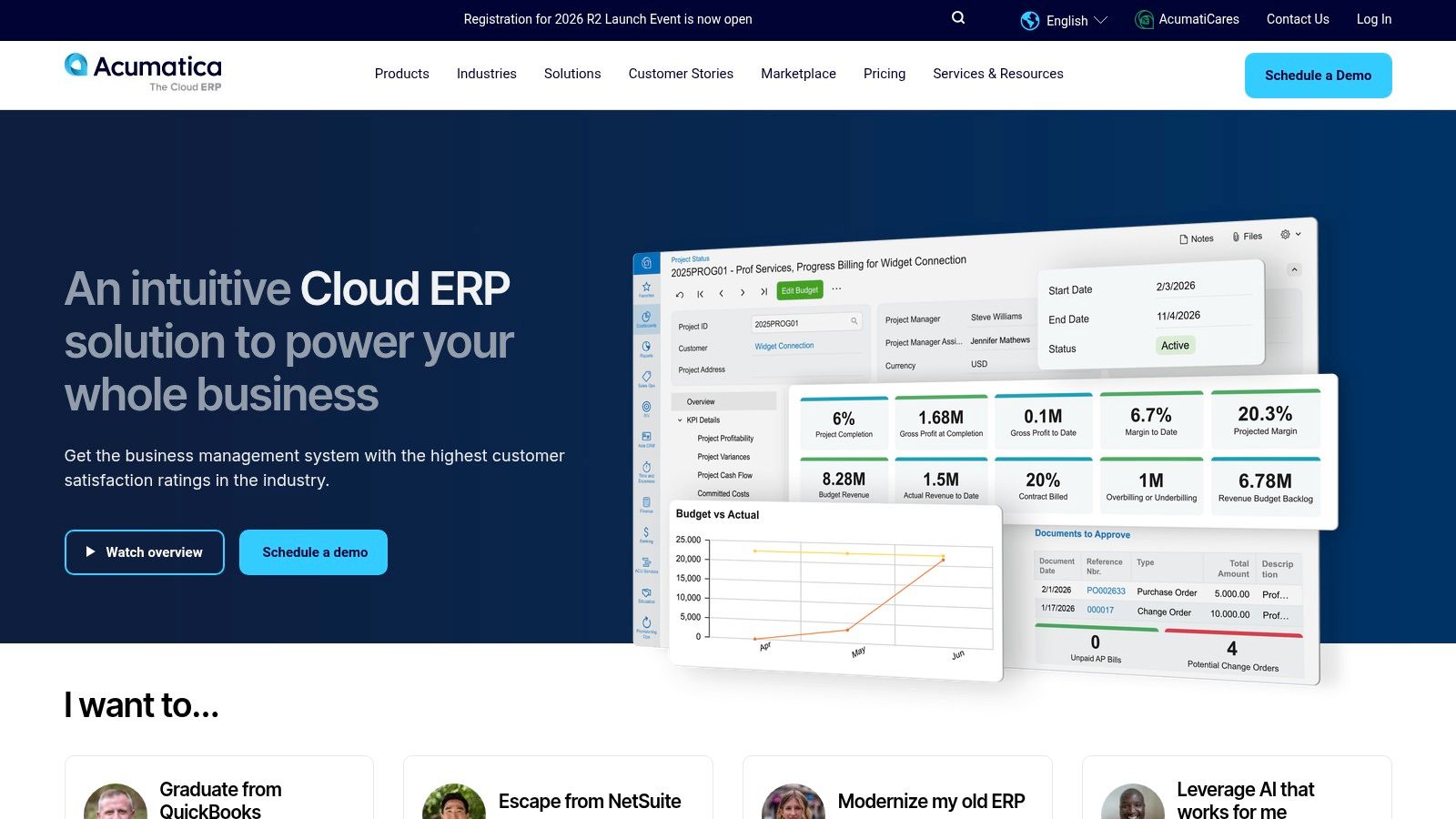
Acumatica Cloud ERP fits organizations that need multi-entity accounting alongside meaningful operational ERP capabilities. It supports multi-company and multi-branch structures, shared charts of accounts and calendars, automated intercompany AP and AR mirroring, multi-currency conversion, consolidated financial statements, eliminations, and drill-down from group reporting to entity detail.
That combination suits multi-location services, distribution, construction, and project-based businesses where finance cannot be separated cleanly from operational transactions. A consolidated report is only useful when the underlying purchasing, billing, project, inventory, and branch activity reaches the ledger accurately.
When broad ERP scope is justified
Acumatica's licensing approach can appeal to multi-entity organizations that need broad user access. Consumption-based licensing without per-user fees may help teams scale access, but leaders still need to model transaction volumes, modules, integrations, and partner services. Quote-based pricing makes a detailed scenario-based proposal essential.
The platform's intercompany automation can auto-create linked AP and AR documents, which helps finance reconcile both sides of a transaction. Shared structures can also support more consistent reporting across entities without forcing every business unit into identical operational processes.
A complex ownership structure may require additional design effort or add-ons. Ownership changes, unusual consolidation treatments, and nonstandard reporting hierarchies should be tested directly, not assumed from a product overview. The organization should also clarify whether branches are reporting dimensions, operational units, or separate legal entities.
Decision point: Choose Acumatica when operational breadth is part of the business case. Don't buy a broad ERP to solve a narrow consolidation problem.
Acumatica's cloud business management rationale is relevant for leaders evaluating a move away from disconnected systems. The implementation still needs a disciplined data model, clear ownership, and a close design that finance can maintain after consultants leave.
5. Multiview ERP
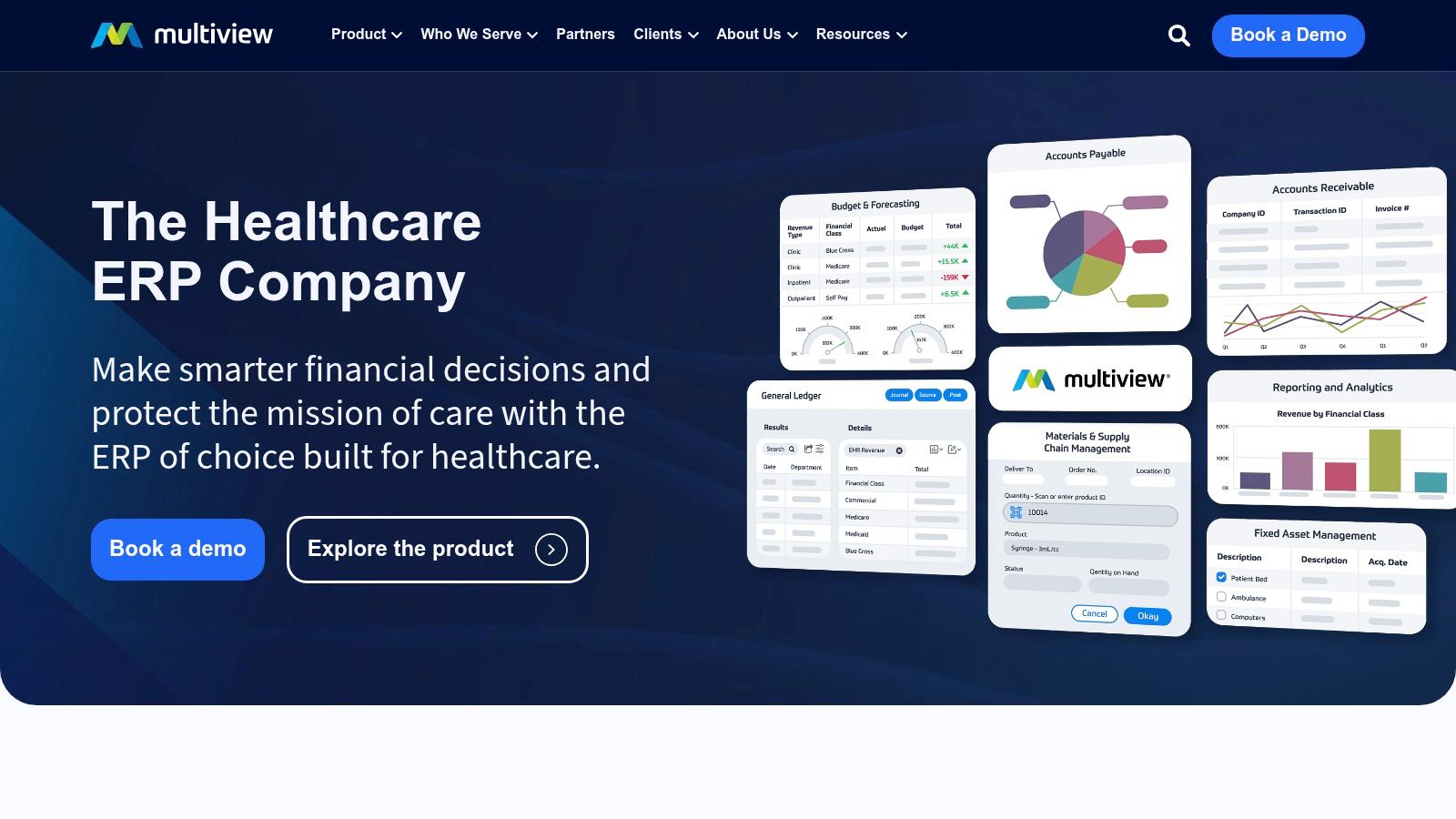
Multiview ERP is the specialist option for healthcare and nonprofit organizations that need financials designed around complex operating structures. It supports multi-entity reporting, intercompany automation, healthcare-oriented workflows, and integrations with EMR and EHR environments. For a healthcare provider or multi-facility organization, those details can matter more than broad ERP functionality.
Its intercompany design supports self-balancing transactions and settlement through general ledger, accounts payable, and accounts receivable. A single database spanning entities can support real-time reporting and business intelligence, allowing finance leaders to investigate group results without rebuilding the reporting package from separate files.
Why healthcare buyers should look beyond generic ERP
Healthcare finance teams often need to connect financial reporting with facilities, service lines, clinical systems, and operational ownership. A platform that understands those relationships can reduce the translation required between the finance model and the business model. Multiview's healthcare orientation, including EMR and EHR interfacing, makes it a credible candidate for systems where the accounting platform must reflect care delivery operations.
The trade-off is ecosystem size. Public pricing information is limited, and the platform is generally sold through direct or partner quotes. Smaller ecosystems can also mean fewer third-party add-ons, so integration requirements deserve early attention.
A healthcare system should evaluate the complete financial workflow, from clinical-system data through intercompany settlement and executive reporting.
Don't evaluate Multiview on consolidation alone. Require demonstrations of facility reporting, intercompany entries, approval controls, audit history, interfaces, and the month-end responsibilities that remain with the controller's team. Lucentive's discussion of consolidating and automating finances for multi-entity organizations provides a useful starting point for that evaluation.
6. Gravity Software
Gravity Software is built for growing organizations that want multi-entity accounting on the Microsoft Power Platform without adopting a full enterprise ERP footprint. Its foundation in Dataverse connects it with Power BI and Power Automate, giving Microsoft-oriented teams a path to reporting and workflow automation without retrofitting a single-entity accounting application.
The platform supports multi-entity general ledger, AP, AR, consolidated reporting, inventory, and order workflows. It can also connect with Dynamics 365 CRM, which may appeal to organizations that want finance and customer workflows connected while keeping the accounting platform focused.
A focused Microsoft alternative
Gravity's strength is the combination of accounting specialization and Microsoft extensibility. Finance teams can build reporting and automation around a familiar technology environment, while leadership gets consolidated financials across entities. That can be a better fit than Business Central when the company needs multi-entity accounting but doesn't require a broad ERP deployment.
The Microsoft foundation also creates a responsibility. Depending on usage, the organization may need separate Power Platform licensing, and administrators must understand how those licenses, environments, security roles, and automations affect total cost. The ecosystem is smaller than the largest ERPs, and advanced industry modules may be limited.
A good selection process should start with the finance process, not the platform. Document the close calendar, entity permissions, intercompany transactions, management dimensions, CRM handoffs, and reporting needs. Then determine whether Gravity handles the required workflow natively or needs configuration.
Best fit: Gravity Software is compelling when Microsoft integration is central and the finance team wants purpose-built multi-entity accounting without buying an oversized ERP.
Request a demonstration using real entity structures and reporting outputs. A polished generic dashboard won't reveal whether your team can maintain the system, reconcile exceptions, and produce an audit-ready close without depending on a developer for everyday work.
Visit Gravity Software for the product overview and use its Microsoft alignment as a fit criterion, not as a substitute for implementation planning.
7. SoftLedger
SoftLedger is the strongest option for finance and operations teams that treat integrations as a core system requirement. It is an API-first accounting platform built for multi-entity and multi-currency consolidation, automated eliminations, and real-time financial data flows. Its developer-friendly approach can work well when the organization has modern data pipelines, internal technical resources, or specialized systems that must feed finance continuously.
The platform supports real-time consolidation and intercompany eliminations, while optional capabilities address subscription or SaaS accounting and crypto or digital-asset accounting. Those specialized modules make SoftLedger more relevant to technology companies and finance teams whose accounting model doesn't fit a traditional industry template.
The trade-off is ecosystem depth
SoftLedger's integration model is attractive when the company wants accounting data to move through APIs rather than manual exports. Real-time consolidation can reduce dependence on post-close spreadsheet assembly, but the result depends on clean source data, well-designed mappings, reliable controls, and clear ownership between finance and engineering.
The vendor and ecosystem are smaller than those of Tier-1 ERPs. That may be an advantage for a focused finance team, but it can create dependency on a narrower partner and support network. Pricing isn't published, so buyers need a scoped quote and a realistic total-cost model that includes integrations, implementation, monitoring, and technical administration. For API-led finance architecture, it can also help to compare requirements against external technical guidance such as the MuleSoft API strategy library and the OpenAPI Initiative.
Integration warning: An API-first ledger won't fix poorly defined entity ownership, inconsistent source data, or undocumented intercompany rules.
SoftLedger is a credible fit for a technology-led finance function, especially when subscription, SaaS, or digital-asset accounting matters. It is less suitable for a buyer seeking the broadest ecosystem, established healthcare workflows, or a conventional ERP operating model. Review SoftLedger's accounting platform with a technical and finance owner in the same meeting.
Top 7 Multi-Entity Accounting Comparison
| Product | Implementation complexity | Resource requirements | Expected outcomes | Ideal use cases | Key advantages |
|---|---|---|---|---|---|
| Sage Intacct | Moderate, configuration for multi‑entity and industry modules | Finance team + implementation partner; quote‑based licensing that grows with entities/modules | GAAP‑friendly consolidations, dimensional reporting, real‑time drill‑downs | Healthcare, nonprofit, professional services, multi‑site businesses needing fund/location reporting | Strong out‑of‑box intercompany automation, dimensional GL, industry integrations |
| Oracle NetSuite OneWorld | High, substantial scope for global deployments | Significant: implementation partners, modular/quote pricing, governance for subsidiaries | Robust multi‑GAAP, multi‑currency consolidations and centralized subsidiary controls | Large or growing international organizations with complex legal structures | Enterprise scale, mature consolidation workflows, multi‑book support |
| Microsoft Dynamics 365 Business Central | Moderate, core features ready, advanced workflows may need apps | Per‑user licensing; benefits from Microsoft 365/Azure alignment and partner support | Integrated SMB/midmarket ERP with consolidation and Power Platform reporting | Organizations standardized on Microsoft 365 seeking predictable TCO | Predictable published pricing, tight Microsoft ecosystem integration |
| Acumatica Cloud ERP | Moderate to high, flexible but complex scenarios need design | Consumption‑based licensing; partner ecosystem; quote pricing based on transactions/modules | Automated intercompany AP/AR, consolidated statements, drill‑down detail | Multi‑location services, distribution, construction, project‑based firms | Scalable access (no per‑user fees), broad industry editions and partners |
| Multiview ERP | Moderate, financials‑first focus simplifies core setup | Partner/quote sales, smaller third‑party ecosystem | Real‑time reporting across entities, intercompany settlement, healthcare modules | U.S. healthcare systems, nonprofits, multi‑facility organizations | Healthcare specialization, practical intercompany automation |
| Gravity Software | Low to moderate, streamlined on Power Platform but requires MS expertise | Requires Power Platform/Dataverse and possibly separate Microsoft licenses | Consolidated multi‑entity accounting with Power BI/Power Automate integration | Growing multi‑entity orgs wanting lightweight, Microsoft‑native solution | Native Power Platform foundation, strong Microsoft extensibility |
| SoftLedger | Low to moderate, fast API integrations but consolidation design needed | Developer resources for APIs, quote‑based pricing | Real‑time multi‑entity consolidation with automated eliminations; optional SaaS/crypto modules | Finance/ops teams needing API‑first accounting, real‑time consolidation, tech integrations | API‑first, developer‑friendly, real‑time consolidation capabilities |
Choose the Platform You Can Operate Well
The best multi-entity accounting software is the platform your finance team can govern, close in, and explain to an auditor. Sage Intacct is the strongest starting point for mid-market financial control, dimensional visibility, healthcare, nonprofit, professional services, and multi-site organizations that need focused cloud financials. NetSuite OneWorld is better when global subsidiaries, multi-book accounting, local compliance, and broader ERP scope justify a larger implementation.
Business Central and Gravity Software make sense for Microsoft-centered environments, but they solve different problems. Business Central offers a broader ERP path, while Gravity focuses more directly on multi-entity accounting within the Microsoft ecosystem. Acumatica is the better choice when distribution, construction, project operations, inventory, or other operational workflows belong in the same ERP. Multiview is the specialist choice for healthcare-focused financial operations. SoftLedger fits API-first finance teams with technical integration requirements and specialized accounting models.
Buyer checklist for a defensible decision
- Entity structure: Separate legal entities from departments, locations, funds, grants, providers, and projects.
- Currencies: Confirm transaction, functional, reporting, translation, and remeasurement requirements.
- Eliminations: Demonstrate intercompany sales, purchases, loans, allocations, settlements, and exceptions.
- Reporting dimensions: Test whether management reporting can stay granular without creating an unmanageable chart of accounts.
- Integrations: Map EMR, EHR, CRM, payroll, billing, banking, operational, and data warehouse connections.
- Audit trail: Require history for mappings, adjustments, approvals, eliminations, and cleared reconciliation exceptions.
- Implementation ownership: Identify who owns data cleanup, design decisions, testing, training, and post-go-live support.
- Licensing: Model entities, users, modules, transactions, integrations, partner services, and administration.
- Time-to-value: Compare the time required to replace spreadsheets with the time required to deploy and operate the platform.
Financial consolidation software has become a substantial category, valued at USD 3.27 billion in 2025 and projected to reach USD 7.77 billion by 2035, implying about 9% CAGR over that period, according to Emergen Research's account reconciliation software market report. A separate estimate places the broader accounting software market at USD 17.96 billion in 2025, with a projection of USD 49.23 billion by 2036, showing that multi-entity capability is developing inside a much larger accounting technology market. These projections don't choose your system, but they explain why consolidation and reconciliation are now treated as core infrastructure rather than optional add-ons.
The operational case is more direct. Independent ERP guidance says consolidation alone can add 4 to 10 days to a financial close, and a sound workflow should connect entities, eliminate intercompany activity, and log mapping and elimination changes with timestamps and user attribution, as described by DataSights' multi-entity consolidation guidance. Automated consolidation and eliminations can move close work from days to hours while preserving an entry-level audit trail, according to Binary Stream's comparison of automated and manual consolidation. Reconciliations should also preserve the original mismatch, adjustment, and approver history, because an undocumented cleared exception creates audit risk, as outlined by Zone's reconciliation controls guidance.
Summary
The best multi-entity accounting software is the one your finance team can govern, close in, and defend under audit. Sage Intacct is a strong starting point for many mid-market organizations that need consolidation, dimensional reporting, and intercompany capabilities without committing to a broader ERP too early. NetSuite OneWorld is the better fit when global scale, multi-book accounting, and broader operational scope are core requirements.
Business Central and Gravity Software are compelling for Microsoft-centered environments, but they serve different priorities. Business Central is the broader ERP route, while Gravity is more focused on multi-entity accounting with Microsoft alignment. Acumatica is a better match when operational workflows such as inventory, distribution, construction, or project accounting belong in the same system. Multiview stands out for healthcare and nonprofit finance teams, and SoftLedger fits API-first organizations that need real-time integrations and specialized accounting flexibility.
If you're a CFO, Controller, CEO, or VP Finance leader, schedule a 30-minute working session with Lucentive before selecting a platform or buying Sage Intacct alone. Lucentive can help you compare entity structure, reporting needs, integrations, implementation ownership, licensing, and time-to-value against the way your company operates.
SEO FAQ
What does multi-entity accounting software do?
It manages financial information for related legal entities in a connected environment. Core capabilities include separate entity books, consolidated reporting, intercompany accounting, eliminations, permissions, currency handling, and drill-down from group results to entity transactions.
Which features matter most in multi-entity accounting software?
Prioritize automated consolidation, intercompany matching and eliminations, dimensional reporting, entity-level permissions, multicurrency support, integrations, and a complete audit trail. Feature volume matters less than whether the platform supports your close process without spreadsheet reconstruction.
How do consolidation and intercompany automation work?
The system collects financial data from each entity, applies the group's reporting structure, records related-party transactions on both sides, and removes intercompany activity from consolidated results. The implementation must define mappings, ownership, settlement rules, approval controls, and exception handling before automation can be trusted.
When should a mid-market company consider Sage Intacct?
Consider Sage Intacct when separate QuickBooks files, manual spreadsheet consolidation, inconsistent entity processes, or poor dimensional visibility are slowing the close and limiting leadership reporting. It's particularly suitable when the organization needs strong financial control without immediately adopting a broad operational ERP.
How should buyers evaluate implementation risk?
Ask the partner to show how it will clean and migrate data, design the chart of accounts and dimensions, configure eliminations, test integrations, train users, and support the first closes. The software alone doesn't create control. A properly designed implementation does.
Lucentive provides Sage Intacct advisory and implementation services for growing mid-market, healthcare, nonprofit, dental, and professional services organizations that need clearer multi-entity financial control. Visit Lucentive to schedule a personalized Sage Intacct demo or a no-pressure working session focused on your close process, reporting structure, and implementation fit.