A controller at a growing dental service organization opens the month-end file and finds five entities spread across QuickBooks, Excel, payroll, and an EMR. The close has become a prolonged reconciliation exercise. The CEO wants same-day reporting on a new service line, but the finance team is still assembling basic results, and the audit trail depends on people remembering which spreadsheet contains the latest adjustment.
That situation looks like a software problem. It's usually a decision problem first. An ERP can provide stronger multi-entity control, dashboards, workflows, and an organized audit trail, but only if the implementation team understands where the business fits the system and where it doesn't.
ERP fit-gap analysis creates that evidence before contracts are signed and configurations are frozen. Used properly, it protects scope, budget, adoption, and the time-to-value of a cloud ERP such as Sage Intacct. Used as a rushed checklist during a vendor demo, it merely creates false confidence. Finance leaders who are guiding digital change should also consider the broader responsibilities described in the CFO's role in digital transformation.
Table of Contents
- When the Books Slow Down and the Software Won't Catch Up
- What an ERP Fit Gap Analysis Is
- How to Run the Analysis From Kickoff to Disposition
- The Gap Matrix and Scoring Template
- Configure, Customize, Workaround, or Change the Process
- Common Pitfalls and What a Clean Run Looks Like
- Turning Findings Into a Go-Live You Trust
- Summary
- Frequently Asked Questions
When the Books Slow Down and the Software Won't Catch Up
The pressure usually becomes visible at month-end. A Controller at a multi-location DSO may be reconciling intercompany balances while waiting for payroll exports and payer data. A nonprofit finance director may be rebuilding grant reports manually because the general ledger doesn't reflect the organization's fund structure cleanly. A professional services firm may know revenue is being earned but lack a dependable view by project, client, or contract.
Buying an ERP without a structured fit-gap exercise doesn't remove those problems. It transfers them into the implementation, where they become configuration disputes, change requests, testing failures, and training issues. A vendor can demonstrate an attractive workflow while leaving unanswered questions about dimensions, approvals, integrations, data ownership, and reporting controls.
Practical rule: If a requirement matters to the close, the audit, a customer commitment, or a regulatory control, it belongs in the fit-gap record before anyone calls it “standard.”
The most expensive shortcut is treating the sales demo as discovery. A demo shows what the presenter chooses to show. A fit-gap analysis records what the buyer requires, tests the candidate system against that requirement, and assigns a decision to every variance.
That distinction matters for mid-market companies moving beyond QuickBooks. Sage Intacct plus a capable implementation partner can support clearer financial visibility and stronger control, but software alone won't decide whether a clinic should change its approval path, whether a nonprofit needs a custom grant report, or whether a project-based firm should accept a standard revenue workflow.
A disciplined analysis gives the CFO and steering committee something more useful than enthusiasm. It provides a defensible view of what will be configured, built, documented, tested, or changed before the project becomes expensive to redirect.
What an ERP Fit Gap Analysis Is
An ERP fit-gap analysis compares business requirements with standard ERP capabilities and turns each variance into a decision. The team documents the process, tests the candidate system, records evidence, estimates effort, and assigns a formal disposition.
The practice became established in ERP implementation work by the early 2000s and supports both selection and design, as described in this academic treatment of fit-gap analysis. Practical ERP selection guidance also reinforces the need for a structured requirements and scoring method rather than relying on a vendor walkthrough alone, as outlined in this ERP selection checklist and scoring template. A useful review follows three steps:
- Compare needs and capabilities: State what the organization must accomplish and what the candidate ERP provides.
- Apply a consistent method: Classify requirements and score fit, risk, effort, and business impact.
- Assign a disposition: Decide whether each item will be accepted, configured, handled through a workaround, addressed by process change, customized, or deferred.
That structure aligns with broader ERP implementation control guidance that emphasizes documented scope, solution design, testing evidence, and approval records before deployment, as discussed in this ERP implementation controls overview.
A fit still carries work. Standard functionality may require configuration, security design, data preparation, integration setup, or testing. A gap also does not automatically disqualify the platform. The practical question is whether its resolution is acceptable in scope, timing, control, and cost.
The two passes buyers often miss
The first pass supports selection. A finance team compares a focused requirement set across platforms such as Sage Intacct, NetSuite, and Microsoft Dynamics 365 Business Central. The register may include the general ledger, accounts payable, accounts receivable, revenue recognition, multi-entity accounting, grants, project accounting, reporting, and integrations.
The second pass begins after platform selection. Detailed design defines dimensions, workflow conditions, integration ownership, non-functional requirements, reports, roles, and controls. Cloud and modular ERP projects frequently contain partial fits that a high-level comparison cannot expose.
Each disposition should carry weighted effort, delivery risk, and an owner. That converts a reassuring checkmark into an estimate of scope in dollars and days, while preserving the trade-off behind the decision. Neutral ERP reference material also places fit-gap work in selection and design, supporting a two-pass fit-gap discipline.
The buyer's matrix must remain independent of the vendor demo. It becomes the evidence base for approval, design, and scope control rather than a recap of the sales presentation.
How to Run the Analysis From Kickoff to Disposition
A credible exercise starts by defining who can answer questions and who can make decisions. Name an executive sponsor, finance lead, process owners, an IT representative, and the implementation advisor. Without those roles, workshops produce observations but not signed dispositions.
Set the scope around the processes that create financial risk or operational friction. For a healthcare organization, that may include the GL, AP, AR, payroll, EMR interfaces, payer-related revenue, and multi-entity reporting. A nonprofit may need fund accounting, grant reporting, restrictions, and donor-related workflows. A professional services firm may prioritize project accounting, billing, utilization, and revenue recognition.
Requirements should come from workshops, process maps, current reports, spreadsheets, policies, and sample transactions. Ask users to demonstrate how work happens now, including exceptions. The exception often reveals more than the standard path.
The project should produce a requirements register that states the requirement in business language, identifies the owner, and records the evidence used to validate it. As-is and to-be process maps then show whether the proposed ERP changes responsibilities, approvals, or data movement.
Keep assessment separate from preference
Assess each requirement against the shortlisted platforms before allowing familiarity to drive the decision. A user who says, “We've always done it this way,” hasn't yet explained whether the old method is a control, a convenience, or accumulated work.
Once a platform is selected, run the detailed design pass. Review dimensions, entities, approval rules, integrations, reporting, security, data migration, and testing implications. Workshops and stakeholder simulation are valuable here because they expose gaps before build and user acceptance testing, rather than during go-live, as outlined in fit-gap recommendations for ERP planning.
The assessment should classify each item as fit, partial fit, or gap, then assign effort and risk. A partial fit deserves as much attention as a full gap when it affects a core control or requires extensive manual intervention.
The core deliverables are:
- Vendor scorecards: Compare platforms against weighted requirements, not demo impressions.
- Gap matrix: Record the issue, impact, disposition, owner, effort, and risk.
- Remediation roadmap: Connect decisions to configuration, development, process change, documentation, and testing.
- Integration register: Identify every upstream and downstream dependency.
- Readiness criteria: Define what must be proven before cutover.
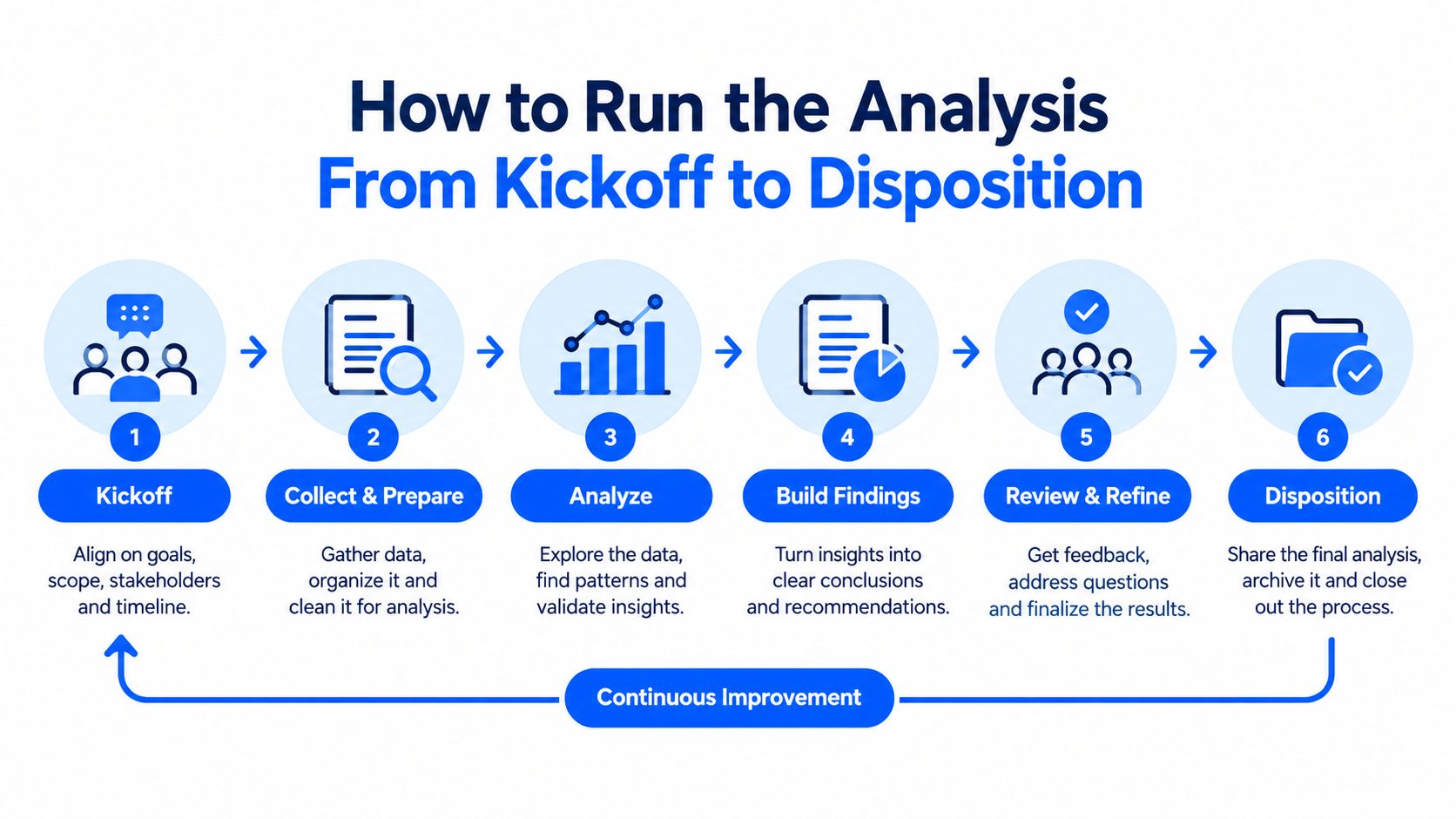
The final step is governance. Each gap needs a named owner, a formal disposition, an effort estimate, and a decision date. The roles and responsibilities of an ERP project manager matter because someone must keep these decisions connected to scope, dependencies, and readiness.
The Gap Matrix and Scoring Template
The gap matrix is the artifact that turns workshop discussion into an executive decision tool. It should let a CFO answer three questions quickly: What does the system cover, what will it take to close the remaining gaps, and who owns the decision?
At minimum, include the requirement, process area, current-state system, target capability, gap description, priority, weighted effort, risk, and disposition. Use a consistent scoring approach such as Fit, Partial, or Gap, then roll the results into a fit view, total effort, and readiness assessment. A formal comparison model is preferable to a collection of workshop notes because it keeps decisions traceable.
Weighted effort should not be a gut-feel label. Consider process complexity, data migration, integration touch points, security, report development, testing depth, training, and ongoing support. Guidance on using data quality assurance to strengthen decisions is relevant here because unreliable source data can turn an apparently small gap into a substantial delivery problem.
| Requirement | Current State (Legacy/QuickBooks) | Target (Sage Intacct) | Gap | Priority | Weighted Effort (days) | Risk | Disposition |
|---|---|---|---|---|---|---|---|
| Intercompany eliminations | Manual spreadsheets across entities | Dimensional entity structure and configured intercompany process | Elimination rules and reporting need design validation | High | To be estimated | High | Configure, then test |
| Grant reporting | Spreadsheet schedules maintained outside the ledger | Custom reports using fund and project dimensions | Report structure must reflect grant restrictions | High | To be estimated | Medium | Configure and report design |
| Payer-based revenue recognition | Manual calculations by payer mix | Revenue workflow aligned to contract and payer rules | Detailed requirements and source data need review | High | To be estimated | High | Design decision before build |
The effort field should be expressed in days and dollars once the team has enough evidence. It's acceptable to leave the estimate open during early selection, but not after detailed design begins. A low-volume requirement with substantial custom development should be separated from a high-volume issue solvable through configuration or process change.
The same matrix should survive selection, design, testing, and readiness review. That continuity creates an audit trail for why a requirement was accepted, changed, deferred, or rejected.
Configure, Customize, Workaround, or Change the Process
Every gap needs a disposition. The four common choices look similar in a spreadsheet, but they create very different long-term obligations.
| Disposition | Best use | Main trade-off |
|---|---|---|
| Configure | Use dimensions, workflows, permissions, parameters, and standard reports | Requires thoughtful design, but generally creates the least upgrade friction |
| Customize | Address a regulatory, contractual, or genuinely differentiating requirement | Adds development, testing, maintenance, and upgrade complexity |
| Workaround | Handle a low-volume edge case outside the core system | Can preserve flexibility, but creates manual control and adoption risk |
| Change the process | Replace a legacy habit or bloated approval path with a standard workflow | Requires stakeholder agreement and change management |
Configuration is usually the first option to test because it uses delivered functionality. It can support a cleaner operating model and avoids custom code that must be revisited during future releases.
Customization has a legitimate place. A compliance obligation or differentiated business process may justify it, but the business should document the reason, expected value, owner, testing approach, and maintenance responsibility. Custom development also increases testing scope and upgrade friction, which raises long-term operating cost, as explained in this overview of ERP implementation decisions. It also deserves formal governance, because implementation research and control frameworks consistently warn that unnecessary customization increases maintenance burden, delivery complexity, and upgrade debt. For more detail, see this ERP implementation control framework and this research on enterprise-wide ERP project lessons.
A workaround can be sensible when the volume and risk are limited. It isn't sensible for a core control such as revenue recognition, grant release, or entity balancing. Manual journals and spreadsheets need owners, review procedures, and reconciliation evidence.
Process change is often the cleanest answer for one-off journal hacks and unnecessary approval chains. It can feel uncomfortable because users must give up a familiar practice. The right partner separates true business differentiation from legacy preference rather than treating every historical step as mandatory.
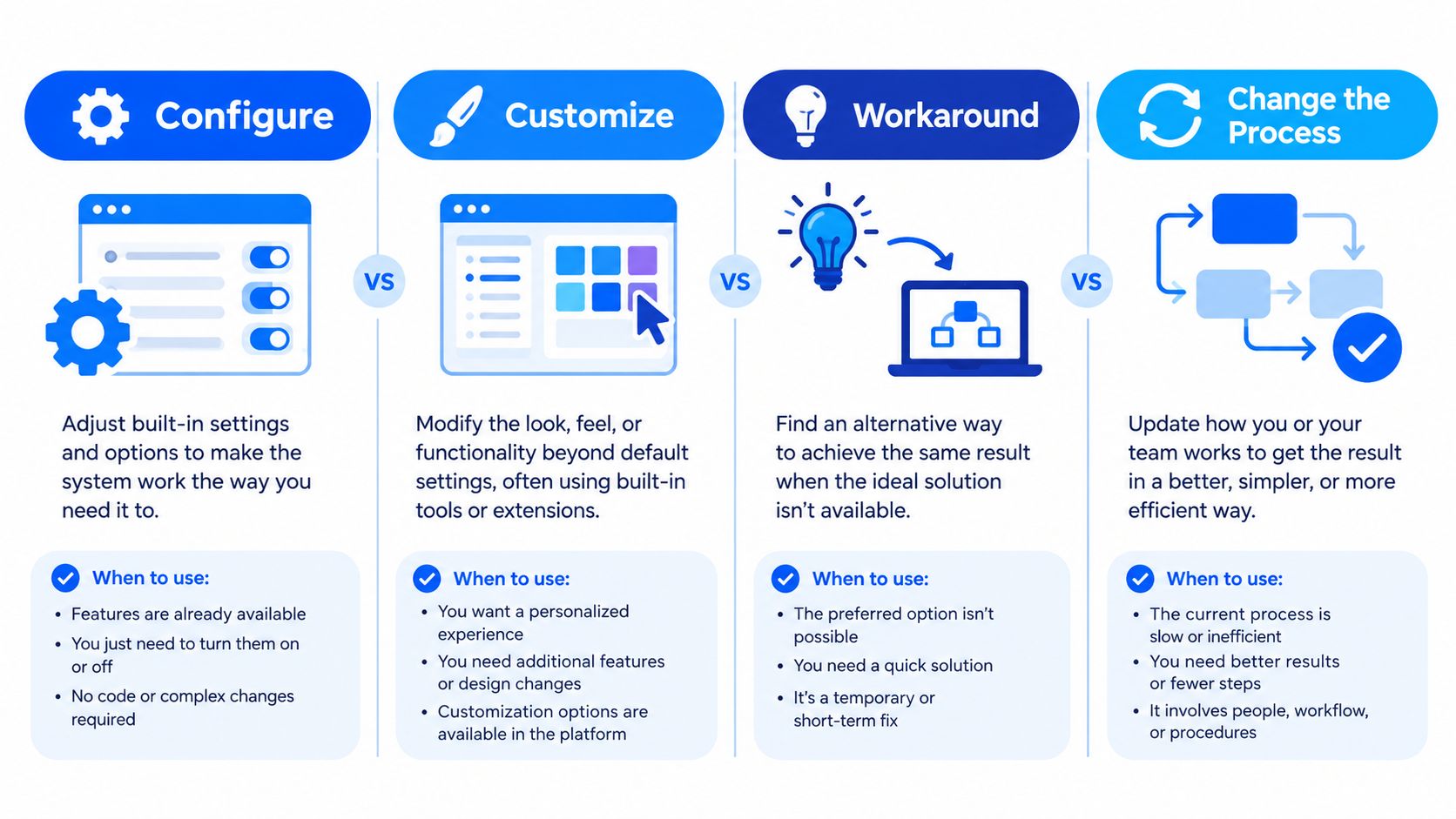
Successful process change depends on communication, training, and sponsor support. A practical ERP change management approach makes the disposition executable instead of leaving it as a decision in a workbook.
Common Pitfalls and What a Clean Run Looks Like
Mid-market teams usually don't fail because they lack intelligence or commitment. They fail because the exercise gives them the wrong kind of confidence.
Five ways the analysis loses value
- Demo checklist thinking: A green response during a demonstration doesn't prove that the workflow works with real data, exceptions, approvals, and reports. Teams need process-by-process evidence before user acceptance testing.
- No executive sponsor: Someone must resolve competing priorities and approve the disposition. Without sponsorship, the matrix remains unsigned.
- Integration blindness: Banking, payroll, payroll tax, AP automation, EDI for DSO insurance claims, 835 remittance, and grant-related data flows can materially change scope. Teams that ignore these dependencies discover the effort after design.
- No weighted effort: A gap count without effort gives leadership an abstract risk register. It doesn't support a budget, schedule, or staffing decision.
- Consultant-owned decisions: The advisor can facilitate the matrix, but the client process owner must validate the requirement and accept the disposition. Otherwise, users may reject the answer during testing.
A clean run produces a different set of artifacts. The client owns the requirements register, process owners sign the gap decisions, and the steering committee can see which items affect controls, integrations, adoption, or cutover.
A gap is not closed because someone typed “configure” into a spreadsheet. It's closed when the configured behavior has an owner, a test, evidence, and an accepted business outcome.
The fit-gap literature treats the method as a quantitative decision tool, not merely a qualitative checklist. One published study of a shared service centre in EMEA reviewed 4,970 processes, recorded 3,191 gaps and 1,808 fits, and reported 4,999 fit-gap observations in total. Its results represented 63.8% gaps and 36.2% fits, with the authors also reporting a 41% process non-conformance level when gap size was considered, as documented in the published ERP fit-gap study.
That example doesn't predict another organization's results. It demonstrates why a numerical evidence trail matters. A matrix can reveal whether the project has a few isolated exceptions or a broad alignment problem that requires scope, process, or platform decisions.
Turning Findings Into a Go-Live You Trust
A fit-gap matrix earns its place when each disposition changes the delivery plan. Configuration items become workstreams with owners, dependencies, and weighted effort in hours or days. Customization requires a governed change request that records the business reason, cost, schedule effect, and future upgrade burden.
Workarounds need documented procedures, reconciliation rules, controls, and training. Process changes require sponsor approval, communications, and support for users adopting a different workflow. The disposition is complete only when its owner, test evidence, acceptance criteria, and business outcome are recorded. That standard is consistent with broader guidance on user acceptance testing and implementation controls, which stresses documented test results, sign-off, and evidence retention before deployment. See this overview of ERP implementation controls for audit readiness and this discussion of ERP implementation and internal controls.
Three artifacts leadership should demand
A disciplined analysis should produce three working documents:
- A realistic implementation SOW: Scope, days, dollars, assumptions, integrations, reports, data conversion, testing, and exclusions should reflect the weighted findings.
- A monitored risk register: Each material gap needs an owner, likelihood, mitigation, trigger, and escalation path.
- A cutover checklist: Readiness criteria should link to closed gaps, test evidence, approved workarounds, controls, and training completion.
Partner maturity affects the result. Healthcare providers, DSOs, nonprofits, and professional services firms bring different controls, reporting structures, integrations, and operating rhythms. Product certification demonstrates platform knowledge, but it does not show whether an advisor can identify the requirement behind a payer workflow, grant restriction, project billing rule, or multi-entity close.
Lucentive is a Sage Intacct National Premier Partner with implementation expertise and experience serving mid-market, healthcare, and nonprofit organizations. Its approach can include a current-state process review, a Sage Intacct demonstration against a prioritized gap matrix, and a fixed-scope proposal. Those steps expose scope before contract signature rather than leaving implementation details unresolved.

Before signing, schedule a 60-minute working session to pressure-test the findings. Confirm which requirements fit Sage Intacct, which need configuration or process change, which justify customization, and how the selected dispositions translate into implementation days, dollars, owners, and go-live evidence.
Summary
ERP fit-gap analysis compares business requirements with ERP capabilities and assigns a formal disposition to every variance. The strongest approach uses two passes, selection followed by detailed design, and carries the gap matrix through implementation and readiness review. Weighted effort turns abstract gaps into decisions about scope, risk, days, and dollars. Configuration and process change often reduce long-term complexity, while customization and workarounds require explicit governance. For mid-market finance leaders, the analysis is the evidence base for choosing Sage Intacct, defining implementation scope, and building confidence before go-live.
Frequently Asked Questions
What is ERP fit-gap analysis?
ERP fit-gap analysis is a structured comparison of business requirements against standard ERP functionality. The team determines whether each requirement fits, partially fits, or represents a gap, then records the resolution approach, owner, effort, and risk. It's used during platform selection and again during detailed design, when integrations, dimensions, workflows, reports, and controls become clearer.
Why should fit-gap analysis happen twice?
The first pass helps finance leaders compare shortlisted platforms against core requirements. The second pass occurs after selection and examines detailed design decisions, including configuration, integrations, reporting, security, data, and testing. A single presales checklist can miss issues that only become visible when the selected platform is mapped to real processes and exceptions.
What belongs in a gap matrix?
A useful gap matrix includes the requirement, process area, current-state system, target capability, gap description, priority, weighted effort, risk, owner, and proposed disposition. It should also connect each item to testing, documentation, or a remediation activity. The matrix should remain traceable from selection through design, user acceptance testing, and go-live readiness.
When should a company customize its ERP?
Customization should be reserved for a requirement that has a strong business, compliance, contractual, or differentiating rationale and cannot be addressed through configuration or process change. The decision should include development effort, testing scope, maintenance ownership, and upgrade implications. Customization can solve a real need, but it raises total cost and long-term operating complexity.
Are workarounds acceptable in an ERP project?
Workarounds can be appropriate for low-risk, low-volume edge cases when the business documents the procedure, owner, review, and reconciliation. They shouldn't carry a core control such as revenue recognition, grant release, or entity balancing. If a workaround affects a central finance process, the team should reconsider configuration, process change, or a properly governed customization.
How does fit-gap analysis support go-live readiness?
Each disposition feeds a different readiness activity. Configuration becomes a build and test item, customization requires a governed change request, workarounds need procedures and training, and process changes require sponsor approval and adoption support. The resulting SOW, risk register, and cutover checklist give leadership a direct connection between identified gaps and go-live evidence.
What should I ask an ERP implementation partner?
Ask how the partner captures requirements, validates gaps with process owners, estimates weighted effort, governs customizations, and maintains traceability through testing. For healthcare, DSO, nonprofit, or professional services projects, ask how the team handles the relevant integrations, controls, reporting, and operational exceptions. A working session using your prioritized requirements is more revealing than a generic product demonstration.
Lucentive can help you review current-state finance processes, test Sage Intacct against a prioritized gap matrix, and shape a fixed-scope implementation proposal. Visit Lucentive to schedule a no-pressure working session and see whether Sage Intacct fits your company before you commit to a platform or partner.