Day eight of the month-end close, and the consolidated balance sheet still doesn't tie. One subsidiary says the management-fee entry posted. Another says it never received the invoice. A third entity uploaded a spreadsheet with a different exchange rate, while the controller searches email for the latest version of the intercompany schedule.
That isn't an accounting theory problem. It's a data, process, and ownership problem that delays reporting, weakens the audit trail, and keeps CFOs from trusting the numbers. If your organization has outgrown QuickBooks or now operates across healthcare sites, nonprofit programs, dental entities, or professional-services businesses, intercompany governance deserves attention before the next audit exposes the gaps.
Table of Contents
- Why Intercompany Transactions Stall the Month-End Close
- What an Inter Company Transaction Is
- Accounting Entries and Elimination Mechanics
- The Hidden Risk of Unpriced Intercompany Relationships
- Manual Reconciliation Versus Automated Intercompany Processing
- Transfer Pricing Documentation as a Data Governance Problem
- Building a Scalable Intercompany Framework with the Right Partner
- Summary
- FAQ
Why Intercompany Transactions Stall the Month-End Close
The close usually breaks at the handoff between entities. The parent company records a shared-services charge, the operating entity books an expense, and both sides assume the other team will reconcile the balance. When the amounts, dates, dimensions, or due-to and due-from accounts differ, consolidation produces an exception instead of a clean elimination.
The finance team then starts working backward. Someone compares general-ledger exports. Someone else checks whether the invoice was approved. The controller asks whether the charge was a recurring allocation, a one-time reimbursement, or an informal service that was never priced at all. Every answer creates another spreadsheet tab.
Practical rule: If a transaction requires email to explain which entity owes what, the process isn't controlled enough for a growing multi-entity business.
The consequence reaches beyond a late close. Leadership receives delayed operating information, entity margins become harder to compare, and audit support depends on individual memory. A balance can be economically valid yet still fail reconciliation because one entity posted revenue while the other posted an expense, or because the parties used different accounting periods. That is why close teams often treat intercompany as both an accounting issue and a process-control issue, a theme echoed in finance guidance from firms such as PwC. The consolidation requirement also appears in SEC regulation, which states that intercompany items and transactions between consolidated entities must be eliminated, as outlined in 17 CFR § 210.4-01.
Where spreadsheets lose control
Spreadsheets can capture a list of balances. They rarely provide dependable control over the full lifecycle of an inter company transaction.
- Ownership becomes unclear: No one knows whether the originating entity, receiving entity, or corporate accounting team owns the exception.
- Evidence gets scattered: Contracts, allocation calculations, approvals, invoices, and journal-entry support sit in separate locations.
- Changes become invisible: A revised amount or account mapping can overwrite the prior version without a reliable audit trail.
- Consolidation becomes reactive: The team discovers mismatches after posting instead of preventing them at entry creation.
A structured multi-entity accounting approach gives finance leaders a better operating model. Each entity can retain its local books while the group applies consistent transaction rules, account mappings, approvals, and consolidation logic.
The CFO decision is straightforward. If intercompany exceptions consume close time every month, adding another reconciliation checklist won't solve the root cause. You need a process that identifies the relationship when the transaction is created, generates the corresponding entries, and preserves enough detail for review.
What an Inter Company Transaction Is
An intercompany transaction is an exchange between separate legal entities under common ownership or control. It may involve cash, goods, services, intellectual property, financing, or shared-cost allocations. An intracompany transaction stays within one legal entity, such as a transfer between departments or business units.
Map the legal entities before mapping departments. A healthcare parent may pay for centralized billing and charge operating clinics a management fee. A nonprofit may allocate shared technology or administrative costs across legally separate organizations or programs. A dental service organization may provide marketing, recruiting, or back-office support to affiliated practices. A professional-services group may transfer staff time, technology costs, or project resources between entities.
The operational risk appears when these flows exist without a defined price, owner, account mapping, or supporting record.
Flows finance teams commonly miss
Management fees compensate one entity for administrative, executive, compliance, or operational support. The provider records revenue or an intercompany recovery, while the recipient records an expense or asset allocation.
Shared-services allocations distribute payroll, technology, rent, purchasing, human resources, or finance costs. The obligation exists even when the corporate team pays the vendor directly and no cash moves between subsidiaries.
Intercompany sales transfer inventory, supplies, equipment, or services. The seller records a receivable and revenue. The buyer records a payable and an expense, inventory, or fixed asset, depending on the transaction.
Royalty charges cover the use of intellectual property, brands, software, or other rights. Ownership, terms, calculation logic, and evidence must be defined before the charge is posted.
Intercompany loans create principal and, where applicable, interest obligations. The lender records a receivable and interest income. The borrower records a payable and interest expense.
Use a discovery exercise before configuring automation:
- List every legal entity and its functional role.
- Review recurring vendor payments made on behalf of another entity.
- Search for shared employees, licenses, facilities, software, and intellectual property.
- Identify recurring journal entries using due-to, due-from, management-fee, royalty, loan, or allocation accounts.
- Ask operational leaders which services they receive, including services accounting does not currently charge for.
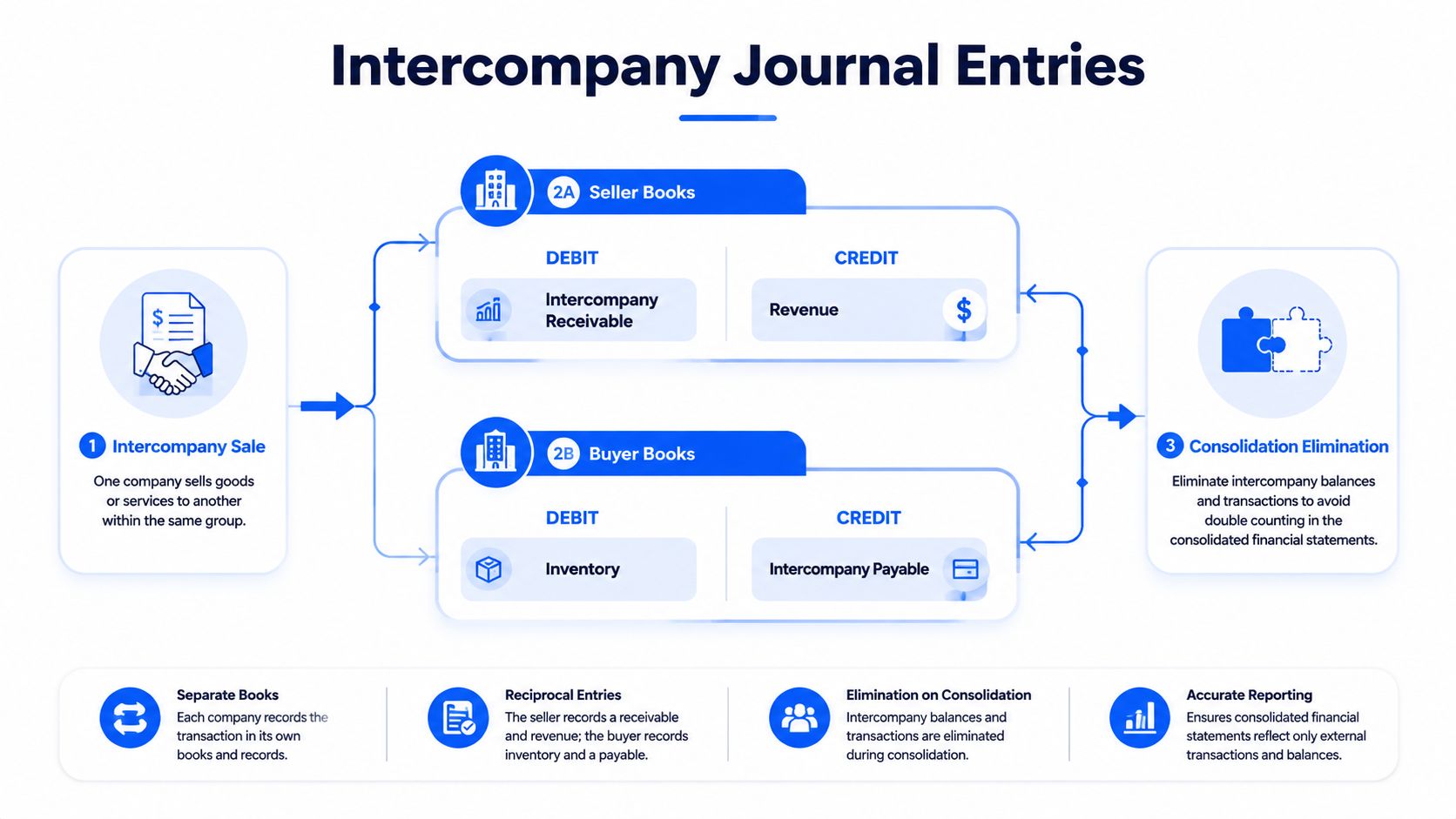
Under consolidated financial reporting, the group is presented as a single economic entity. Internal balances and activity therefore cannot remain in consolidated revenue, expense, assets, liabilities, or profit. Eliminations cover open account balances, security holdings, sales, purchases, interest, dividends, receivables, payables, notes, royalties, and management fees.
Identification is the first control. If finance does not know that a chargeable relationship exists, it cannot price, book, reconcile, or eliminate the transaction. Unpriced or loosely governed flows leave data gaps that spreadsheets rarely expose before the close or audit. For global groups, that same identification step also supports transfer-pricing compliance under the OECD Transfer Pricing Guidelines and the arm's-length principle described by the OECD. In the U.S., related-party pricing authority also sits under IRS Section 482 guidance, which gives finance leaders another reason to identify material intercompany relationships early.
Accounting Entries and Elimination Mechanics
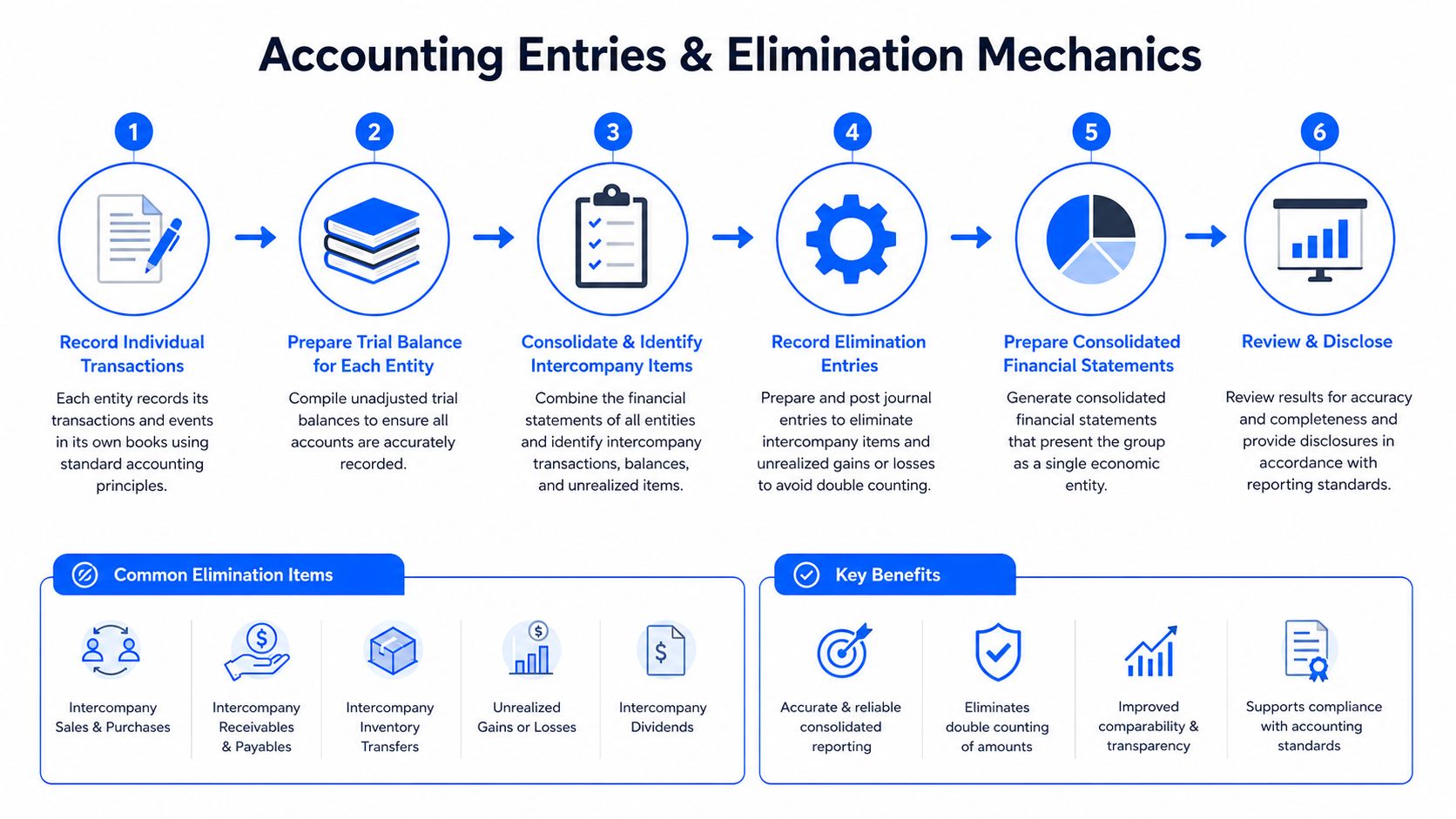
The accounting logic is simple. Each legal entity records its side of the transaction in its own ledger. Consolidation then removes the internal effect so group reporting reflects activity with external parties.
Consider an intercompany sale. The seller might record:
- Debit intercompany receivable
- Credit intercompany revenue
The buyer records:
- Debit inventory, expense, or another appropriate asset account
- Credit intercompany payable
At the entity level, both entries are correct. At the consolidated level, the receivable and payable cancel, and the internal revenue and corresponding internal cost must be removed. If the buyer still holds inventory containing internal profit, the elimination may also need to address unrealized profit based on the applicable accounting treatment.
Three practical entry patterns
For a management-fee charge, the service entity generally records a debit to intercompany receivable and a credit to management-fee revenue or recovery. The recipient records a debit to management-fee expense and a credit to intercompany payable. The elimination reverses the internal revenue and expense, while the balance-sheet accounts clear from the consolidated presentation.
For an intercompany loan, the lender records a debit to an intercompany loan receivable and a credit to cash. The borrower records a debit to cash and a credit to an intercompany loan payable. If interest is charged, the lender records interest income and the borrower records interest expense. Consolidation removes the internal loan balances and internal interest activity. Deloitte also discusses how intercompany matters affect consolidation analysis in its guidance on transactions between a parent and subsidiary.
For an allocation paid by one entity on behalf of another, the paying entity may record a receivable or due-from balance, while the receiving entity records an expense and due-to liability. The support should show the source cost, allocation basis, receiving entities, accounting period, and approval.
The entries must agree on more than the total amount. Controllers should also validate entity IDs, account codes, dimensions, dates, currencies, transaction type, and supporting documentation. A balance can match numerically while still posting to the wrong department, program, location, or fund.
Elimination is a control, not a cleanup step
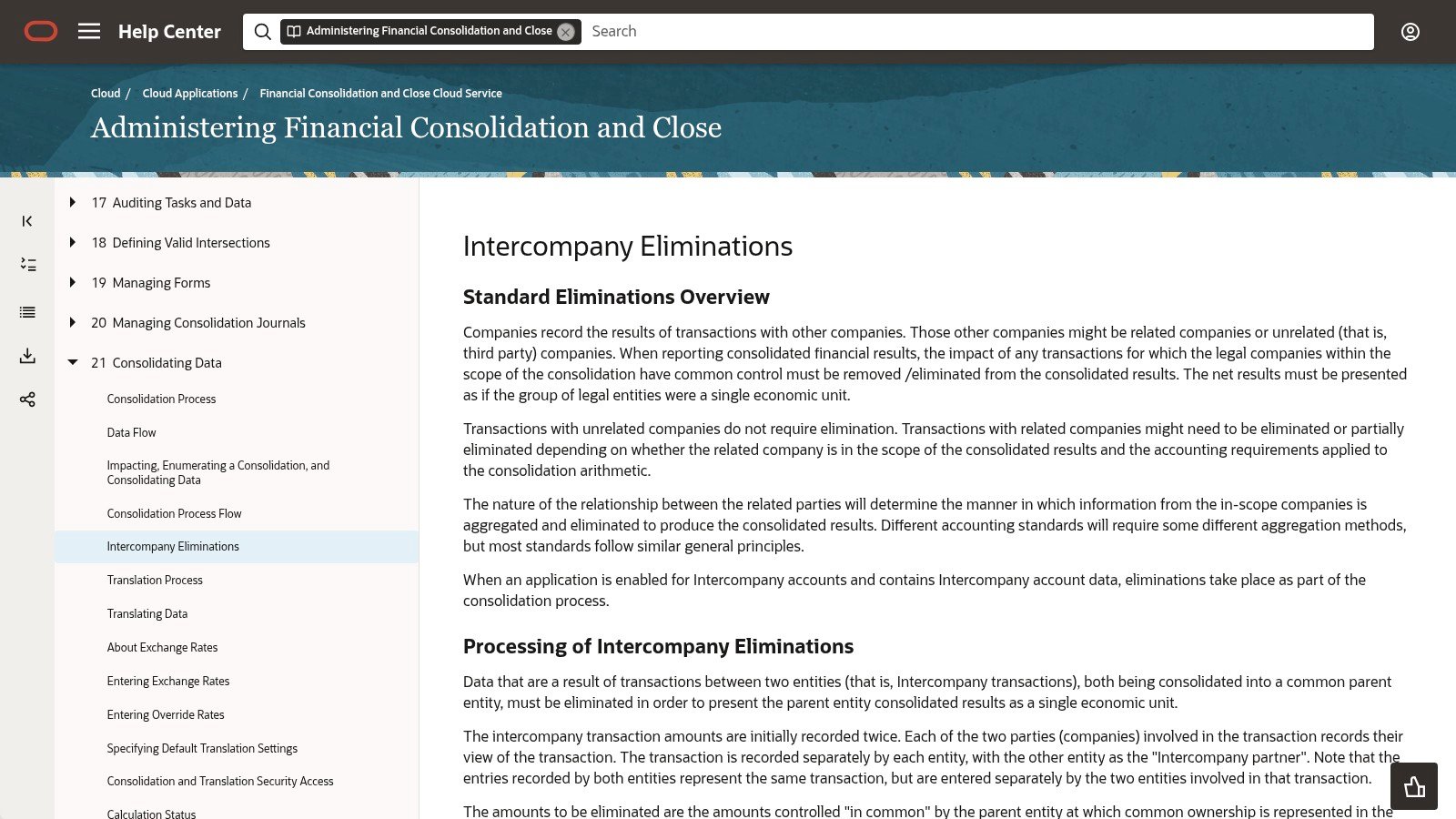
Oracle's consolidation guidance states that intercompany effects between commonly controlled legal entities must be removed and that elimination entries must net to zero, with debits equal to credits. That gives controllers a practical test: every elimination batch should balance, identify the entities involved, explain the source transaction, and remain traceable to the underlying entries.
The Sage Intacct general ledger can serve as the accounting foundation for entity-specific postings, dimensions, approvals, and reporting rules when it's configured around the organization's actual transaction flows. Software won't decide whether a management fee is economically justified or whether a service occurred. It can, however, enforce the posting structure and reduce the number of opportunities for two entities to record different versions of the same event.
The Hidden Risk of Unpriced Intercompany Relationships
The most dangerous intercompany relationship may be the one nobody has priced. A parent may provide finance, recruiting, compliance, technology, or executive support to subsidiaries, while a shared-services team uses intellectual property owned by another entity. Corporate employees may support an operating company without an agreement defining the service or an invoice recording the charge. The activity is real, but the accounting record is vague.
That gap creates more than transfer-pricing exposure. It can distort entity margins, hide the true cost of operations, trigger delayed true-ups, and create audit disputes even when cash never moves. A 2026 tax practice discussion describes how auditors may uncover these relationships only after transaction totals cross materiality thresholds, when specialists are often brought in late. Eide Bailly's 2026 discussion highlights the practical question finance leaders should answer first: what happens when the transaction exists operationally, but no price was ever set?
Find the activity before you set the price
Start with an operational inventory, not a transfer-pricing template. Ask service owners in finance, IT, HR, legal, marketing, and operations which entities receive support. Then trace shared employees, software licenses, facilities, insurance, vendor contracts, and intellectual property to the entities using them.
System comparison exposes the gaps spreadsheets often miss. Look for services described in contracts or workflows but absent from invoices and journals. Review unexpectedly strong or weak entity margins for missing allocations, duplicated costs, or inconsistent pricing. For each material relationship, document whether the group will charge, absorb, allocate, or discontinue the activity.
Audit preparation starts with operational evidence. A signed agreement helps, but it does not prove that the service occurred, identify who benefited, or explain how the amount was calculated.
The ERP must preserve that evidence at the transaction level. Configure it to identify the provider and recipient, capture the service category, retain the allocation basis, route approvals, and generate a repeatable charge. Separate a genuine intercompany transaction from an internal department movement, because the two events carry different legal and reporting consequences.
The objective is not to charge for every internal interaction. It is to identify economically significant flows early enough for finance leaders to make a deliberate policy decision. If the team waits for an audit request, it has already lost control of the timeline, supporting evidence, and remediation cost.
Manual Reconciliation Versus Automated Intercompany Processing
A close can look controlled until one entity posts an invoice, another records a journal, and neither side uses the same counterparty, currency, or service description. The reconciliation then becomes detective work. Spreadsheets may show that balances differ, but they rarely explain whether the cause is a late entry, an unpriced service, a mapping error, or a missing approval.
Manual processing remains workable for a small group with limited flows and stable reviewers. It fails as teams duplicate entries across company files, exchange spreadsheet versions by email, and prepare consolidation adjustments after local books are closed. Each new entity or recurring charge adds another place for data to diverge.
Automation places the control earlier in the transaction. An ERP can generate the corresponding entry, apply entity and account rules, require defined fields, and route exceptions while the period remains open. It does not decide the group's pricing policy. It enforces the policy and makes missing or inconsistent data visible.
| Control area | Manual reconciliation | Automated intercompany processing |
|---|---|---|
| Close timing | Depends on exports, spreadsheet updates, and follow-up emails | Uses configured rules and exception workflows |
| Data quality | Relies on duplicate entry and human comparison | Creates linked entries and validates required fields |
| Audit evidence | Contract support, messages, and journal files sit in separate places | Transaction history, approvals, and posting detail stay together |
| Scaling | More entities and flows create more reconciliation work | Entity, dimension, and workflow rules extend within the system |
| Management view | Consolidated results appear after manual cleanup | Entity and group reporting use a common data structure |
Use a manual process only when the team can answer yes to each question below:
- Can every entity identify its intercompany counterpart without a spreadsheet?
- Do both sides use the same date, amount, currency, account, and dimension?
- Can the controller trace each balance to a contract, invoice, allocation, or approval?
- Does the process flag unpriced services before consolidation?
- Can the team add an entity without rebuilding the close workbook?
If those answers are inconsistent, the root issue is usually design and control, not effort. Documentation expectations from the IRS transfer pricing FAQs show how quickly weak recordkeeping becomes a tax and audit problem once related-party balances become material.
A no answer indicates a design problem, not a discipline problem. The process is making accountants perform system functions by hand.
For organizations leaving QuickBooks or disconnected company files, QuickBooks data migration services should cover more than historical balances. The migration plan needs entity structure, chart-of-accounts mapping, due-to and due-from accounts, dimensions, open intercompany items, recurring allocations, and evidence supporting the opening position.
Automation does not remove review. It directs review toward exceptions, policy-driven charges, and unresolved data gaps. Accountants should investigate those items, not retype the same transaction into multiple ledgers and hope the balances agree.
Transfer Pricing Documentation as a Data Governance Problem
Transfer pricing is often treated as a tax department responsibility. That's incomplete. Tax may own the policy, but finance and operations create the data that proves the policy was followed.
The OECD transfer-pricing guidance identifies the arm's-length principle as the international consensus for pricing transactions between associated enterprises and references methods including the comparable uncontrolled price, resale price, and cost plus methods. The selected method affects the defensibility of charges, profit allocation across jurisdictions, double-taxation risk, and documentation work.
The documentation structure
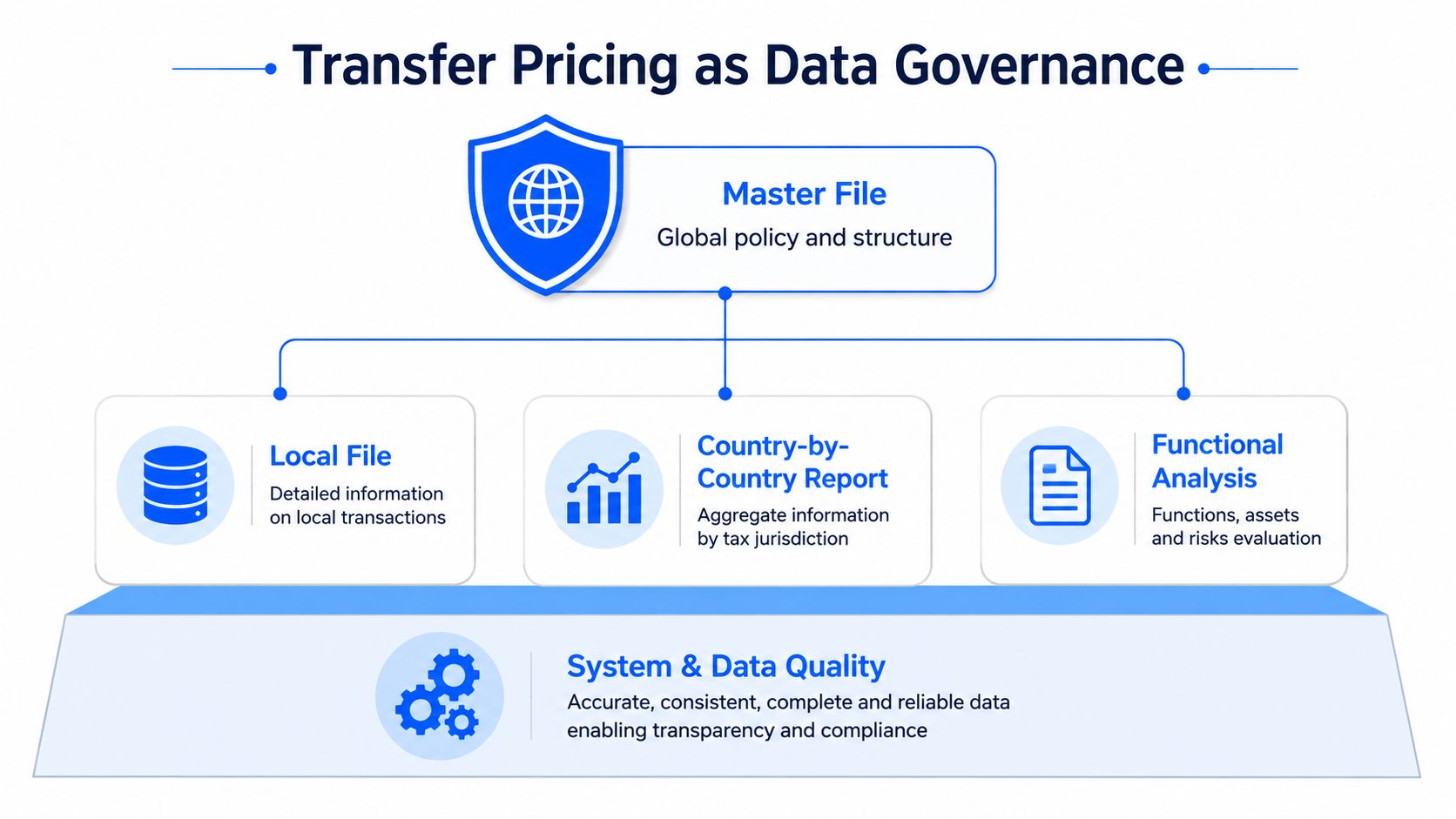
The OECD documentation framework uses three tiers:
- Master file: Describes the multinational group's global business, structure, and transfer-pricing approach.
- Local file: Covers material local transactions, associated enterprises, material agreements, comparability analysis, functional analysis, and the selected method with reasons for choosing it.
- Country-by-country report: Provides jurisdiction-level information for the group's reporting structure and financial activity.
That three-part structure aligns with the OECD BEPS Action 13 final report, which remains a key reference for how multinational groups organize transfer-pricing documentation. For finance teams monitoring current developments, the OECD also opened a public consultation on revisions to Chapter VII covering intra-group services, as summarized by EY and PwC.
Those documents depend on operational facts. A policy can state that a service charge uses a cost-based method, but the local file still needs evidence of the service, the cost pool, the allocation basis, the recipients, and the benefit received.
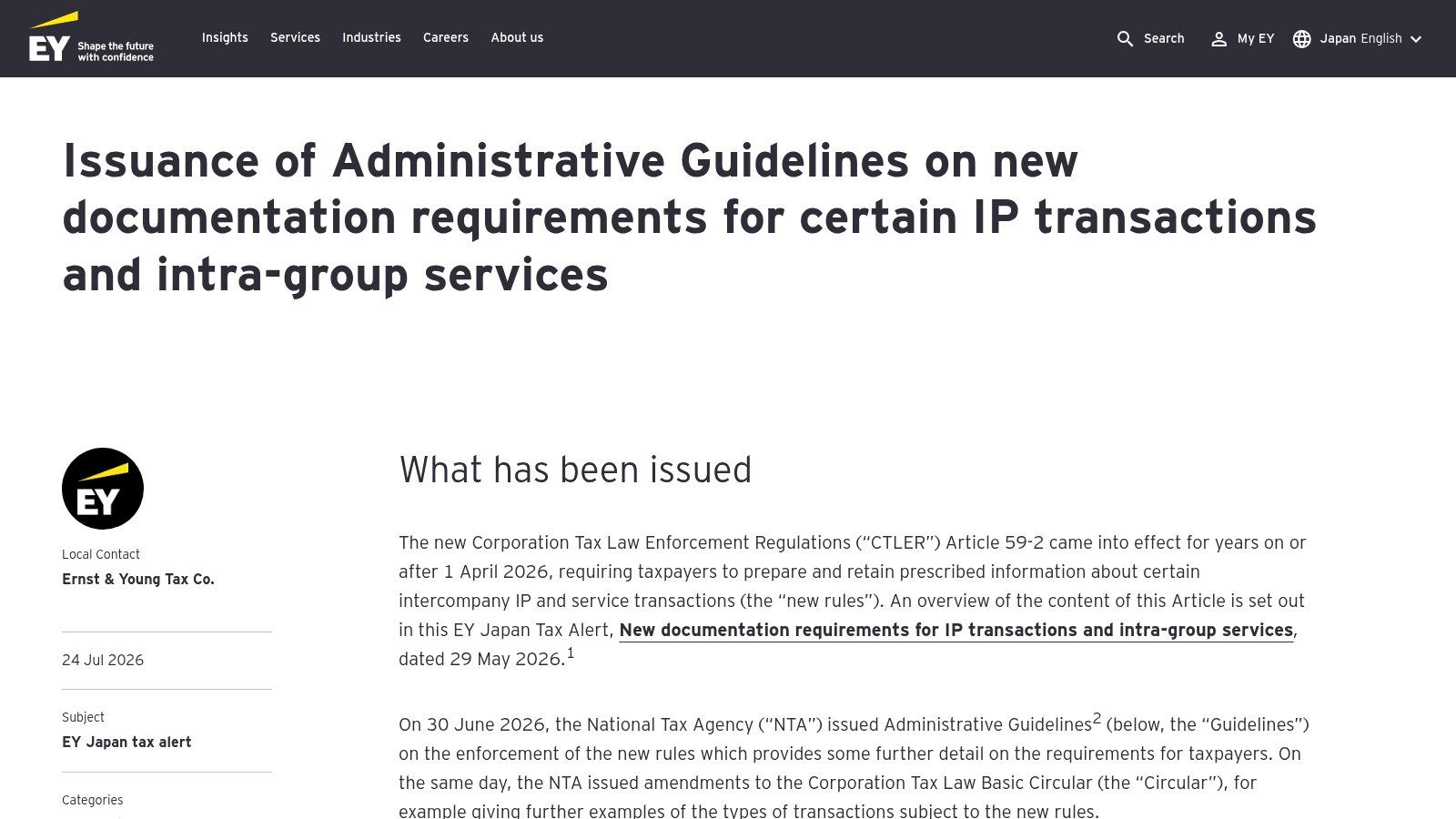
Japan illustrates the direction of travel. Rules effective for years on or after 1 April 2026 require taxpayers to prepare and retain prescribed information for certain intercompany intellectual-property and service transactions, including the nature, location, frequency, cost-calculation method, and benefits received, as described in EY Japan's tax alert. The guidance also addresses overseas-held information that must be promptly retrievable during an audit.
Build the evidence into the workflow
An ERP should capture the metadata when the event occurs, not months later when tax asks for support.
- Transaction nature: Management service, royalty, loan, reimbursement, sale, or allocation.
- Service location: Which entity or site performed the work and where the recipient benefited.
- Frequency: Recurring, periodic, project-based, or one-time.
- Cost calculation: Source cost, markup policy where applicable, allocation driver, and calculation period.
- Benefit received: The operational reason the recipient entity incurred the charge.
Sage Intacct dimensions can help structure this information across entities, departments, locations, programs, projects, or other reporting attributes. The configuration must reflect the documentation requirements, not merely reproduce the legacy chart of accounts.
Compliance failures increasingly start with incomplete records. The price may be reasonable, but if the business can't show what happened, who benefited, and how the amount was built, the defense remains weak.
Building a Scalable Intercompany Framework with the Right Partner
A reliable intercompany framework starts before software configuration. Finance leadership should make four decisions first.
Define the entity model. Identify which legal entities transact, which entities provide shared services, and which relationships require separate due-to and due-from accounts. Don't let the ERP implementation team infer legal structure from old spreadsheets.
Design the chart and dimensions. Establish consistent accounts for receivables, payables, loans, revenue, expense, royalties, allocations, and eliminations. Add dimensions that let management and auditors analyze the flow by entity, location, program, department, project, or service line.
Set approval ownership. Decide who creates a charge, who validates the calculation, who approves the receiving entity's obligation, and who resolves exceptions. A workflow without assigned ownership turns an email problem into a system notification problem.
Write elimination rules. Define which accounts eliminate, when eliminations post, how unrealized internal profit is handled, and how foreign-currency differences are reviewed where relevant. U.S. consolidated-return regulations use the matching and acceleration rules under 26 CFR § 1.1502-13, so tax and financial-reporting requirements should be considered together rather than configured in isolation.
Sage Intacct can support multi-entity accounting, but software alone won't fix undefined relationships, missing prices, or poor source data. The implementation partner must translate operating reality into entity rules, approval paths, dimensions, recurring allocations, and reconciliation controls.
Lucentive is a Sage Intacct National Premier Partner with mid-market, healthcare, and nonprofit experience. Its Sage Intacct reseller and implementation services are relevant when the buying decision includes process design, migration, configuration, training, and post-go-live control rather than software selection alone.
The right evaluation question isn't whether Intacct has an intercompany feature. Ask whether your team can model every material relationship, create the right entry on both sides, identify unpriced flows, document the calculation, and produce a clean elimination without rebuilding the close in spreadsheets.
Summary
An inter company transaction becomes an executive risk when the business activity is real but the price, owner, entry, evidence, or elimination is unclear. A governed cloud ERP can improve multi-entity control, audit traceability, and reporting visibility, but time-to-value depends on implementation decisions made before configuration.
FAQ
What is an intercompany transaction?
An intercompany transaction is an exchange between separate legal entities under common ownership or control. Common examples include shared services, management fees, intercompany sales, royalty charges, allocations, and loans.
Why must intercompany transactions be eliminated?
Consolidated reporting treats the group as a single economic entity. Internal receivables, payables, sales, purchases, interest, dividends, management fees, and related effects must be removed so the group doesn't double-count revenue, expense, assets, liabilities, or profit. PwC explains the consolidation requirement.
What happens when an intercompany transaction was never priced?
The finance team should identify the operational relationship, determine whether it's economically significant, document the service or resource provided, establish an appropriate policy, and record the charge when required. Waiting until an audit can lead to rushed true-ups and incomplete support.
How does automation help with intercompany accounting?
An automated ERP can apply entity rules, create linked entries, route approvals, identify exceptions, support reconciliations, and generate elimination activity. It won't determine the commercial or tax policy for you, so configuration and governance still matter.
What documentation does transfer pricing require?
The OECD framework uses a master file, a local file, and a country-by-country report. The local file includes material intercompany agreements, associated enterprises, functional and comparability analysis, and the selected transfer-pricing method with supporting reasons.
When should a company consider Sage Intacct for intercompany processing?
Consider it when manual reconciliations delay the close, entities use inconsistent account structures, spreadsheets control critical balances, or leadership lacks dependable consolidated visibility. A short working session can determine whether the entity structure and process requirements fit Sage Intacct before you commit to a broader implementation.
Lucentive helps finance leaders design and implement Sage Intacct processes for multi-entity accounting, intercompany controls, dimensions, consolidation, and audit-ready reporting. Visit Lucentive to schedule a 30-minute working session with the team and assess whether Sage Intacct, configured around your company's actual intercompany flows, is the right next step.