When the books start holding growth back, the symptoms usually show up before anyone says “ERP.” The close drags. Consolidations across entities feel fragile. Reporting depends on spreadsheet logic that only two people understand. Audit prep exposes approval gaps, inconsistent data, and too many manual workarounds. If you've outgrown QuickBooks, that pain isn't just about software. It's a finance operating model problem.
That's why the 11 phases of ERP implementation matter. They aren't a bureaucratic checklist. They're a decision sequence that turns finance pain into clearer ownership, cleaner data, stronger visibility, and a more controlled Sage Intacct rollout. The long-established lifecycle commonly cited in the literature includes pre-evaluation screening, package evaluation, project planning, gap analysis, re-engineering, customization, implementation team training, testing, going live, end-user training, and post-implementation support, as summarized in this ERP implementation life cycle overview.
The reason disciplined phase-gating exists is simple. ERP projects are risky. Independent summaries report that roughly 50% to 75% of ERP projects exceed their original budget, schedule, or expected benefits, depending on how failure is defined, and some recent project audits say only about 32% are completed on time, according to the same implementation lifecycle summary. Software alone doesn't solve that. The right implementation partner helps translate business requirements into a usable system, then carries the organization through adoption after go-live.
For finance leaders in healthcare, nonprofit, dental, and other mid-market organizations, that's the core issue. Sage Intacct may be the platform, but implementation quality determines whether you get a faster close, cleaner audit trails, real-time dashboards, and multi-entity control. Lucentive fits naturally into that conversation as a Sage Intacct National Premier Partner with deep mid-market, healthcare, and nonprofit experience.
This guide treats the 11 phases as one connected finance transformation workflow. In each phase, the lens stays practical: objective, core deliverables, timeline realities, stakeholders, common pitfalls, success measures, and what works.
Table of Contents
- 1. Phase 1 Discovery & Needs Assessment
- 2. Phase 2 Solution Design & Configuration Planning
- 3. Phase 3 Data Preparation & Cleansing
- 4. Phase 4 System Build & Configuration
- 5. Phase 5 Integration & API Configuration
- 6. Phase 6 Testing Strategy & Test Planning
- 7. Phase 7 Training & Knowledge Transfer
- 8. Phase 8 Cutover & Data Migration
- 9. Phase 9 Hypercare & Stabilization
- 10. Phase 10 Optimization & Process Refinement
- 11. Phase 11 Ongoing Support & Continuous Improvement
- 11-Phase ERP Implementation Comparison
- Turn the 11 Phases Into a Finance-First Decision
- Summary
- Frequently Asked Questions
- How long do ERP implementations usually take?
- Why do so many ERP projects struggle?
- Which phase matters most for CFOs and controllers?
- Is go-live the end of the implementation?
- What should finance leaders ask an implementation partner before signing?
- When should a company moving off QuickBooks start preparing?
1. Phase 1 Discovery & Needs Assessment
A CFO approves an ERP project because the month-end close drags, reporting lives in spreadsheets, and no one fully trusts the numbers across entities. If discovery is rushed, those same problems get rebuilt in a new system at a higher cost.
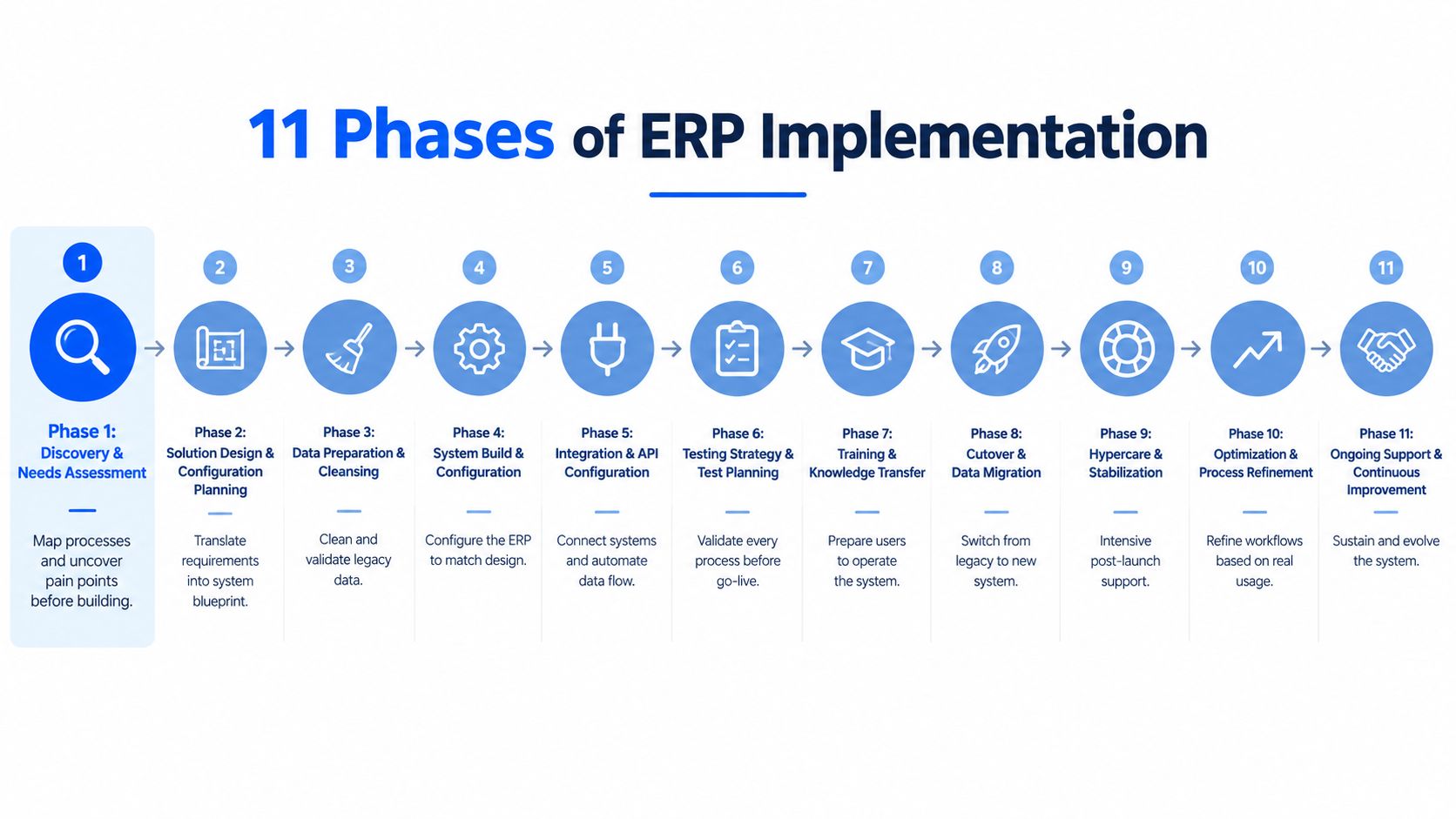
Phase 1 sets the direction for the other ten phases. It is less about gathering software wish lists and more about defining the finance operating model the organization expects the system to support. For healthcare organizations, nonprofits, DSOs, and SMB finance teams outgrowing QuickBooks, that means documenting how money moves, how approvals happen, how reporting is assembled, and where control breaks down.
Discovery should start with the actual work. Walk through close calendars, AP approvals, revenue workflows, allocations, reconciliations, entity consolidations, board reporting, audit support, and the spreadsheets people maintain to fill system gaps. Those spreadsheets matter. They usually reveal where the current process depends on tribal knowledge instead of repeatable controls.
The right participants are rarely limited to the executive team. Controllers, AP leads, billing managers, practice administrators, grant or fund owners, and department managers often know where the delays and exceptions sit. In a DSO, that may mean understanding why each location codes expenses differently. In a nonprofit, it may mean tracing how grant restrictions are tracked outside the GL. In a healthcare group, it often means separating revenue reporting needs from legal entity reporting and management visibility.
What finance should leave this phase with
A good discovery phase produces decisions leadership can use. The output should be specific enough to guide design, data work, testing, and change management later.
Finance should expect these deliverables:
- Current-state process documentation: Close, approvals, billing, cash application, allocations, reconciliations, reporting, and consolidation workflows.
- Business requirements by priority: Separate true reporting, control, and scalability requirements from preferences carried over from the old system.
- Pain-point analysis: Identify where delays, rework, spreadsheet dependency, and weak handoffs create risk.
- Future-state goals: Define the operating outcomes the project is expected to produce, such as a faster close, cleaner audit support, or entity-level reporting without manual consolidation.
- Decision ownership: Confirm who can approve scope, process changes, reporting definitions, and policy choices across finance, operations, and IT.
One trade-off needs to be addressed early. Teams can document every exception they handle today, or they can identify which exceptions should disappear in the future state. The first approach feels safer. The second usually leads to a cleaner implementation. Leadership has to choose carefully, because preserving every legacy workaround increases cost, complexity, and testing effort later.
Finance should lead this phase. IT supports security, integrations, and architecture questions, but discovery is primarily about controls, reporting logic, approval paths, and management visibility.
Partner quality shows up quickly here. An inexperienced team moves straight to product demos and feature checklists. A disciplined team asks who owns reconciliations, how intercompany activity is handled, which reports the board and auditors rely on, and where policy decisions are still unresolved. Gartner's ERP topic guidance points to governance and organizational alignment as recurring factors in ERP outcomes, and discovery is where that discipline starts. For a broader view of finance process standardization and controls, the AICPA also provides guidance on internal control concepts and frameworks.
For Lucentive conversations, this is usually the point that tells finance leaders whether the implementation will solve the right problem. If discovery ends with clear requirements, named decision owners, and measurable business outcomes, the next phases move faster and with fewer expensive resets.
2. Phase 2 Solution Design & Configuration Planning
A finance team can leave discovery with clear requirements and still lose control of the project here.
Phase 2 is where leadership decides what the future operating model will look like inside Sage Intacct. Those choices shape close speed, approval discipline, reporting consistency, and how much manual work survives after go-live. If design stays vague, the build team fills gaps with assumptions. Finance then spends testing cycles reversing decisions it never meant to approve.
The practical question is simple. What should the system enforce, and what should people handle outside the system?
That decision matters more than feature selection. A controller at a multi-entity healthcare group may want location and service-line visibility without creating an account structure so detailed that monthly close slows down. A nonprofit finance leader may need grant and fund reporting that satisfies program management and auditors, while keeping everyday AP and budgeting usable for a lean team. A DSO may need entity-level autonomy for clinics, but centralized cash management and standardized approvals at the support organization level. SMB teams leaving QuickBooks usually feel this trade-off immediately because flexibility in spreadsheets has been hiding weak process discipline.
Good design work produces decisions, not preferences. By the end of this phase, leadership should be able to approve a working blueprint that covers:
- chart of accounts structure and dimension strategy
- entity, location, department, fund, class, or project reporting logic
- approval workflows for AP, purchasing, journals, and expense activity
- user roles, segregation of duties, and exception handling
- consolidation rules, intercompany treatment, and close ownership
- reporting outputs for management, board, lender, donor, investor, or audit use
Some choices reduce effort now but create recurring cost later. Overbuilding dimensions can satisfy every reporting request on paper, but it often creates coding confusion and weak data entry discipline. Keeping approval paths too loose helps adoption early, but it usually leads to policy drift and cleanup work after go-live. Standardizing aggressively across entities lowers support effort, yet local teams may lose workflows they rely on for valid operational reasons. Leadership has to make those trade-offs deliberately.
I usually advise finance leaders to test the design against three real outputs before configuration planning is signed off: the monthly close checklist, the board or management reporting package, and the approval matrix tied to internal controls. If the proposed structure cannot support those cleanly, the design is not ready.
For budgeting and staffing, this phase also sets the implementation load more than many teams expect. Every added approval branch, reporting exception, and entity-specific rule expands configuration, testing, and training effort. Lucentive's guide to planning the costs, time, and resources for an ERP implementation is useful for framing those design choices as resource commitments, not abstract requirements.
The strongest plans are specific enough to build from and restrained enough to scale. That is the standard finance leaders should hold in Phase 2.
3. Phase 3 Data Preparation & Cleansing
A finance team can approve a smart design in Phase 2 and still derail the implementation here. The reason is simple. The new ERP exposes every naming inconsistency, duplicate record, stale vendor, broken reporting relationship, and unreconciled balance that people learned to work around in the old system.
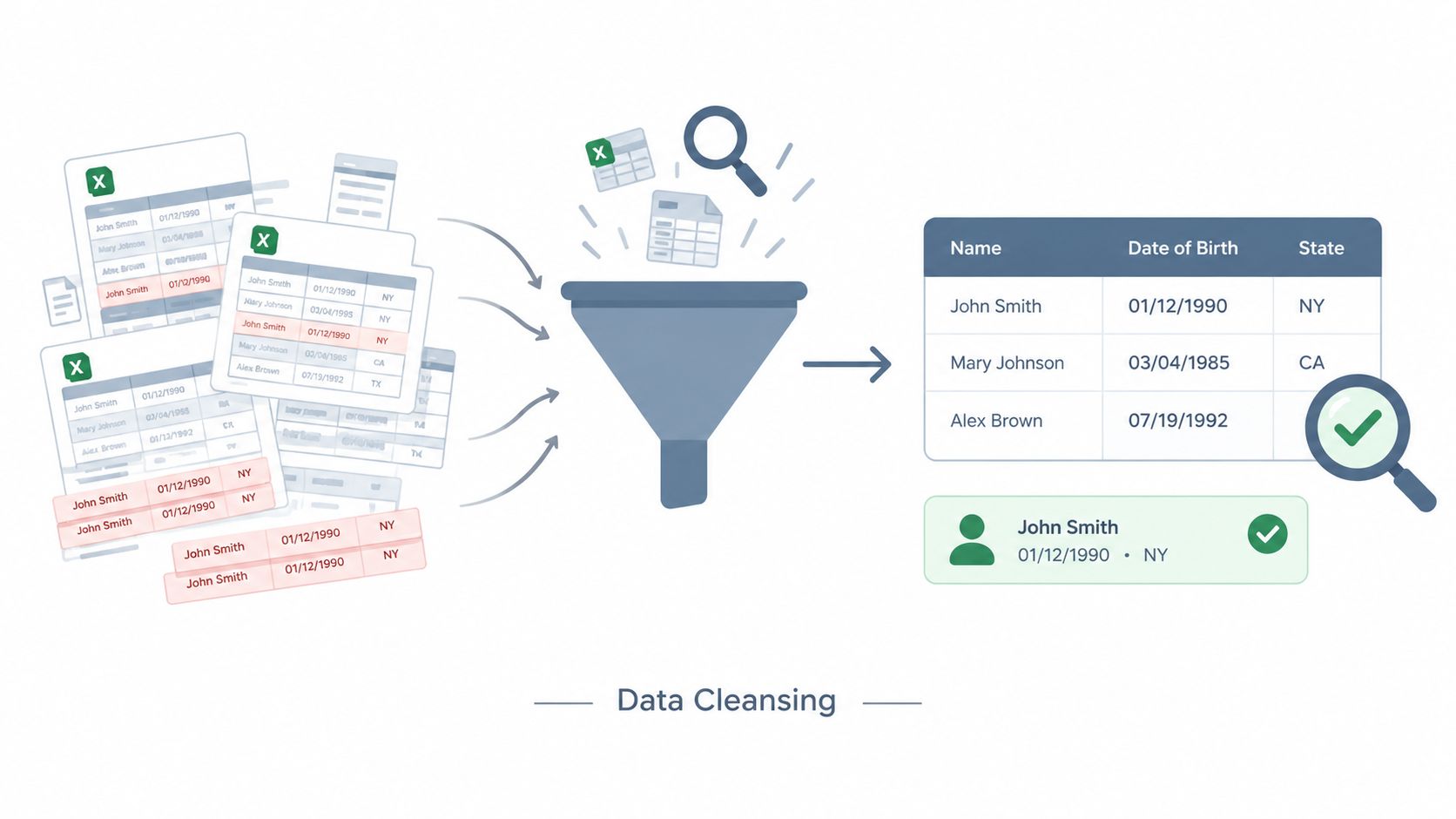
For CFOs and Controllers, this phase is less about file cleanup and more about deciding what the organization will trust on day one. That includes the chart structure going into Sage Intacct, the status of customer and vendor masters, the treatment of inactive records, the integrity of opening balances, and the reporting relationships that will drive close, consolidations, and board reporting after go-live.
The practical question is not whether the legacy data is messy. It usually is. The question is how much of that mess you want to carry into the future system.
I advise leadership teams to make four decisions early:
- What history belongs in the new ERP. Full transactional migration preserves detail but adds cost, testing effort, and reconciliation work. Summary balances are faster, but they can limit trend analysis and audit convenience.
- What counts as a valid master record. Duplicate vendors, inconsistent location names, outdated customers, and inactive employees need disposition rules, not case-by-case debate.
- Who owns each dataset. Finance should not be cleaning every table alone. AP, payroll, development, operations, and site leaders often own the records that create downstream reporting problems.
- What must reconcile before cutover. Opening trial balances, subledger ties, fund balances, entity intercompany positions, and key dimensions need signoff standards.
That decision-making work looks different by organization type. A healthcare group may need to standardize provider, department, and location data across entities that have operated independently. A DSO often finds duplicate vendors and inconsistent naming across practices, which creates immediate AP and spend visibility issues. Nonprofits usually need to resolve fund restrictions, grant coding, and transfer history before they can trust post-migration donor or board reporting. SMB finance teams leaving QuickBooks often discover that years of class, customer, or item usage no longer match how the business is managed.
One warning from experience. Teams often treat cleansing as an administrative task they can squeeze in around daily work. That usually leads to rushed mapping, weak ownership, and unresolved exceptions that resurface during testing. By then, every correction is more expensive because it affects reports, workflows, integrations, and training materials already built on top of the bad data.
A stronger approach is to run this phase like a control exercise with named owners, review checkpoints, and written migration rules. Lucentive's guidance on gaining confidence in decisions through data quality assurance is useful here because finance confidence after go-live starts with documented validation before anything is loaded. For a vendor-neutral reference on migration planning, Oracle also outlines common data migration best practices.
Clean data supports a clean close.
The deliverables in this phase should be tangible: approved data maps, deduplication rules, reconciliation signoffs, a cutoff plan for changes in legacy systems, and a list of exceptions leadership has accepted intentionally. If those items are incomplete, Phase 4 gets harder and Phase 8 gets riskier.
4. Phase 4 System Build & Configuration
A finance team can enter this phase with a clean chart of accounts, approved mappings, and strong intentions, then still end up with an ERP that slows the close. The reason is usually not the software. It is configuration drift. Small decisions made across security, approvals, dimensions, allocations, and reporting start pulling the system away from the operating model leadership approved in earlier phases.
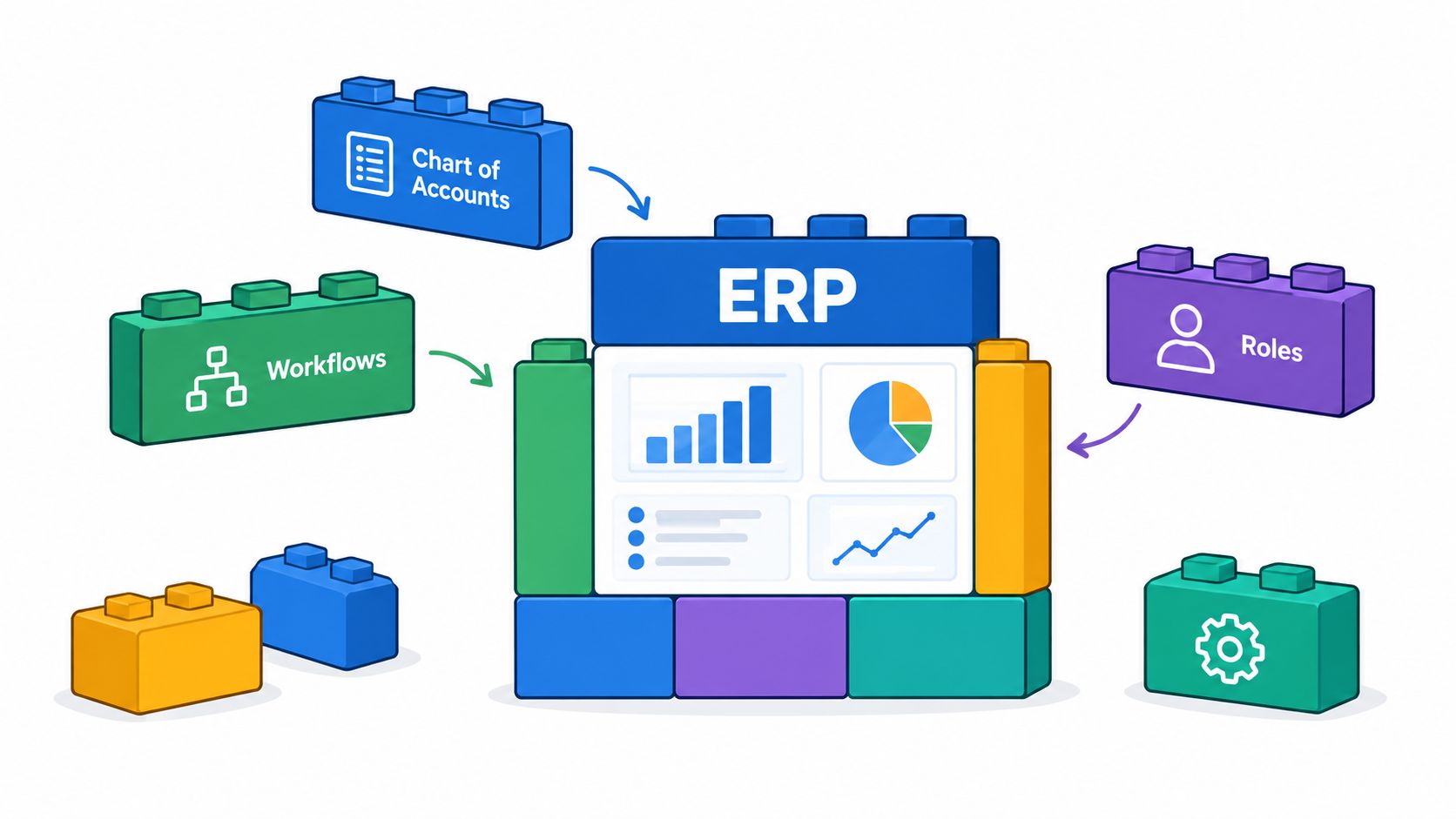
Phase 4 is where finance transformation becomes tangible. Sage Intacct gets built to reflect how the organization closes, approves spend, segments results, manages entities, and produces board or lender reporting. For leaders moving beyond QuickBooks, this is often the first time the team has to decide which controls belong in the system and which still belong in policy, review, or manual exception handling.
That trade-off matters.
If you configure every historical exception, the build gets slower, testing gets harder, and training gets messier. If you oversimplify, users create spreadsheets and side processes the first month after go-live. Strong teams aim for a controlled first release that supports the close, preserves auditability, and gives operators enough flexibility to do real work.
Three decisions usually separate a disciplined build from an expensive one:
First, set design authority. One finance owner should make final calls on accounting behavior, reporting logic, and approval rules after hearing input from operations, IT, and implementation resources. Without that owner, the system starts reflecting committee compromise instead of financial control.
Second, define what must work on day one. That usually includes entity structure, dimensions, role-based access, approval workflows, recurring entries, allocations, consolidations, and core financial statements. Nice-to-have items such as specialized dashboards, edge-case routing, or legacy report replicas can wait if they do not affect close quality or management visibility.
Third, validate configuration against real transactions. Reviewers should not just confirm that a workflow exists. They should confirm that it posts correctly, routes correctly, and reports correctly under normal and exception scenarios.
The right build looks different by organization type. A healthcare group may need approval routing by location, vendor class, and spending threshold, plus entity structures that support clean consolidation across clinics. A nonprofit often needs dimensions and permissions that protect fund reporting while still letting program managers see the operating data they own. A DSO may prioritize location-level visibility, intercompany discipline, and a month-end process that does not rely on exporting data into spreadsheets. SMB finance teams leaving QuickBooks usually need simpler configuration than they expect, but tighter controls than they are used to.
I usually advise finance leaders to review four concrete outputs before they call this phase healthy:
- Configured chart, dimensions, entities, and reporting hierarchy that match approved design
- Security roles and approval paths tested against actual user responsibilities
- Core automations, such as allocations or recurring transactions, producing expected results
- A documented backlog of deferred requests that will not block go-live
This phase should produce a usable finance operating system, not a collection of features. If the build supports faster closes, cleaner approvals, reliable reporting, and fewer offline workarounds, the project is still on the path to value. If leadership cannot explain why a configuration choice reduces risk or improves decision-making, it probably does not belong in the first release.
5. Phase 5 Integration & API Configuration
A finance system can be configured well and still fail operationally if cash receipts, claims, payroll, purchasing, donations, or location activity do not arrive correctly. For CFOs and controllers, Phase 5 is where the implementation stops being an ERP project on paper and starts proving it can support the business you run.
Integration decisions shape close speed, reconciliation effort, and audit exposure. They also expose ownership gaps fast. Finance needs clear answers on source systems, posting timing, field mapping, approval dependencies, exception handling, and who resolves failures at 4:30 p.m. on the last day of the month.
Ensuring process continuity across systems
In healthcare, the question is not whether the EMR can connect. The question is whether the billing, payment, and adjustment data arrives in a way that supports clean revenue reporting and fewer manual journal entries. In a nonprofit, donation platforms, grant systems, and bank feeds need to post against the right funds, classes, and restrictions. In a DSO, practice management data has to reconcile to location-level financials without forcing the corporate team back into spreadsheets. SMB teams leaving QuickBooks often underestimate this phase because they are used to staff bridging systems manually. ERP exposes that hidden labor immediately.
Good integration work starts before configuration is finished because it affects design choices upstream. If AP approvals depend on data from a purchasing tool, or entity reporting depends on how locations are identified in an operational system, finance cannot afford to treat those decisions as technical cleanup later.
I advise leadership teams to review integration readiness through deliverables, not assurances:
- A system-by-system integration map with source owner, target owner, method, frequency, and failure handling
- Field mapping that finance has reviewed, especially for dimensions, entity IDs, vendor records, customers, and transaction dates
- Clear posting rules for summaries versus transaction detail
- Exception queues, alerts, and reprocessing steps assigned to named roles
- Reconciliation procedures for each critical feed before go-live
The trade-off is straightforward. More automation reduces manual work, but it also increases the need for disciplined monitoring and stronger data standards. Some organizations should bring every transaction across in detail. Others are better served by summarized entries with a reliable reconciliation layer. That choice depends on reporting needs, transaction volume, and who will support the integration after launch.
For teams evaluating API options, Lucentive's overview of the Sage Intacct API capabilities is a practical reference point during planning. MuleSoft also offers a useful overview of API-led integration, which can help teams think through architecture, ownership, and long-term maintainability.
Strong implementation partners coordinate directly with your EMR, payroll, banking, fundraising, ecommerce, or practice management vendors and force open the unresolved questions early. Weak ones say the connection is possible and leave finance to absorb the cleanup. In this phase, leadership should measure success by one standard. Data reaches the ERP accurately, on time, and in a form the finance team can trust without rebuilding the process offline.
6. Phase 6 Testing Strategy & Test Planning
Two weeks before go-live, the schedule still looks healthy. Then finance runs a real month-end cycle and finds that allocations post to the wrong entity, donor restrictions do not report correctly, or provider revenue lands in the wrong period. Testing exists to catch those failures while they are still inexpensive to fix.
At this stage, leadership should stop treating testing as a technical checkpoint and start treating it as a finance risk exercise. The question is not whether the screens work. The question is whether the organization can close the books, produce reliable statements, support an audit trail, and trust the numbers on day one.
The strongest test plans are built around business events, not software features. For a healthcare organization, that may mean validating cash posting, deferred revenue, entity balancing, and monthly reporting across locations. For a nonprofit, it usually means fund restrictions, grant tracking, allocation logic, and board reporting. For a DSO, test cases often need to cover multi-location collections, provider compensation inputs, and consolidated visibility. For an SMB moving off QuickBooks, the pressure point is often simpler but no less serious: can the new system handle approvals, accruals, department reporting, and a cleaner close without the spreadsheet workarounds the team relied on before?
A useful test plan usually includes four decisions that finance leadership should review directly:
- Which end-to-end processes must pass before go-live
- Which exceptions must be tested, not just the happy path
- Who has authority to sign off by process area
- Which defects delay launch versus which can wait for post-go-live cleanup
That last point matters. Every issue feels urgent during testing. It is not. If invoice approval takes one extra click, you may still go live. If intercompany entries fail, consolidations break, or restricted revenue reports inaccurately, the launch date should move.
I usually advise clients to run at least one conference-room pilot that follows an actual reporting cycle from transaction entry through close and management reporting. That produces a better decision than isolated scripts ever will. It also exposes whether phase 1 decisions, phase 2 design choices, phase 3 data work, phase 4 configuration, and phase 5 integrations hold up under real operating pressure. That is why these 11 phases work as one finance transformation workflow. Testing is where the earlier phases prove they were disciplined enough to support the business.
The core deliverables are straightforward: approved test scenarios, named testers, expected results, defect logs, retest evidence, and formal finance sign-off. If your implementation partner cannot show those artifacts clearly, finance is being asked to accept risk it cannot measure. For a broader testing and QA perspective, IBM's overview of software testing best practices offers a useful frame for why structured validation matters before launch.
A failed test cycle is not bad news. A surprise after go-live is.
7. Phase 7 Training & Knowledge Transfer
A finance team can approve design decisions in workshops, pass test scripts, and still struggle after go-live if users do not know how the new process works under real deadlines. Training is the phase where the implementation stops being a project plan and starts becoming operating behavior.
For finance leaders, the goal is not attendance. The goal is execution.
Training should be built by role, by process, and by decision rights. A CFO needs to review dashboards, approval queues, close status, and the reports that support board, lender, or investor conversations. Controllers need to run reconciliations, manage exceptions, review posting logic, and confirm the close calendar works in practice. AP, AR, payroll, grant accounting, and location managers need task-level instruction tied to the transactions they own every day.
Generic demos waste time. Process-based practice reduces risk.
The strongest training plans use the configured system, realistic data, and the exact handoffs each team will perform after launch. That means users should practice coding invoices, resolving exceptions, approving journals, reviewing budget-to-actuals, and escalating issues through the support path your organization will use. Those sessions often expose one last set of operating problems. Approval limits may be unclear. A department report may answer the wrong question. A location manager may not know which variance requires finance review.
That is useful information, not a setback.
Healthcare organizations usually need role-specific training for revenue, purchasing, and department leaders who rely on timely cost and entity reporting. Nonprofits often need extra focus on fund restrictions, grant reporting, and approval discipline so staff stop exporting data just to explain balances. DSOs typically benefit from trained super-users at the practice level who can handle common questions quickly without turning every issue into a corporate finance ticket. SMB finance teams moving beyond QuickBooks usually need the biggest shift in close discipline because the system now expects structured workflows, cleaner approvals, and clearer ownership.
I advise clients to define concrete training deliverables before sessions begin: role matrices, process guides, recorded walkthroughs, attendance logs, super-user assignments, and a documented handoff from the implementation team to internal owners. Without those artifacts, knowledge walks out with the consultants.
Change management matters here because resistance rarely starts with software screens. It starts when people are unsure how their work changes, what they own, and where to get help. Lucentive explains that well in its guide to ERP change management. Prosci's overview of change management is another helpful external resource for structuring adoption, communication, and role clarity.
The finance question at the end of phase 7 is simple. Can each team complete its work in the new ERP, with the right controls, without rebuilding the old process in spreadsheets? If the answer is unclear, the organization needs more practice before cutover.
8. Phase 8 Cutover & Data Migration
Monday morning after go-live is when finance finds out whether the implementation was managed as a controlled transition or treated like an IT event. AP needs to post. Cash needs to reconcile. Department leaders expect reports. If opening balances, integrations, or user roles fail under live transaction volume, the problem is no longer project delay. It is business interruption.
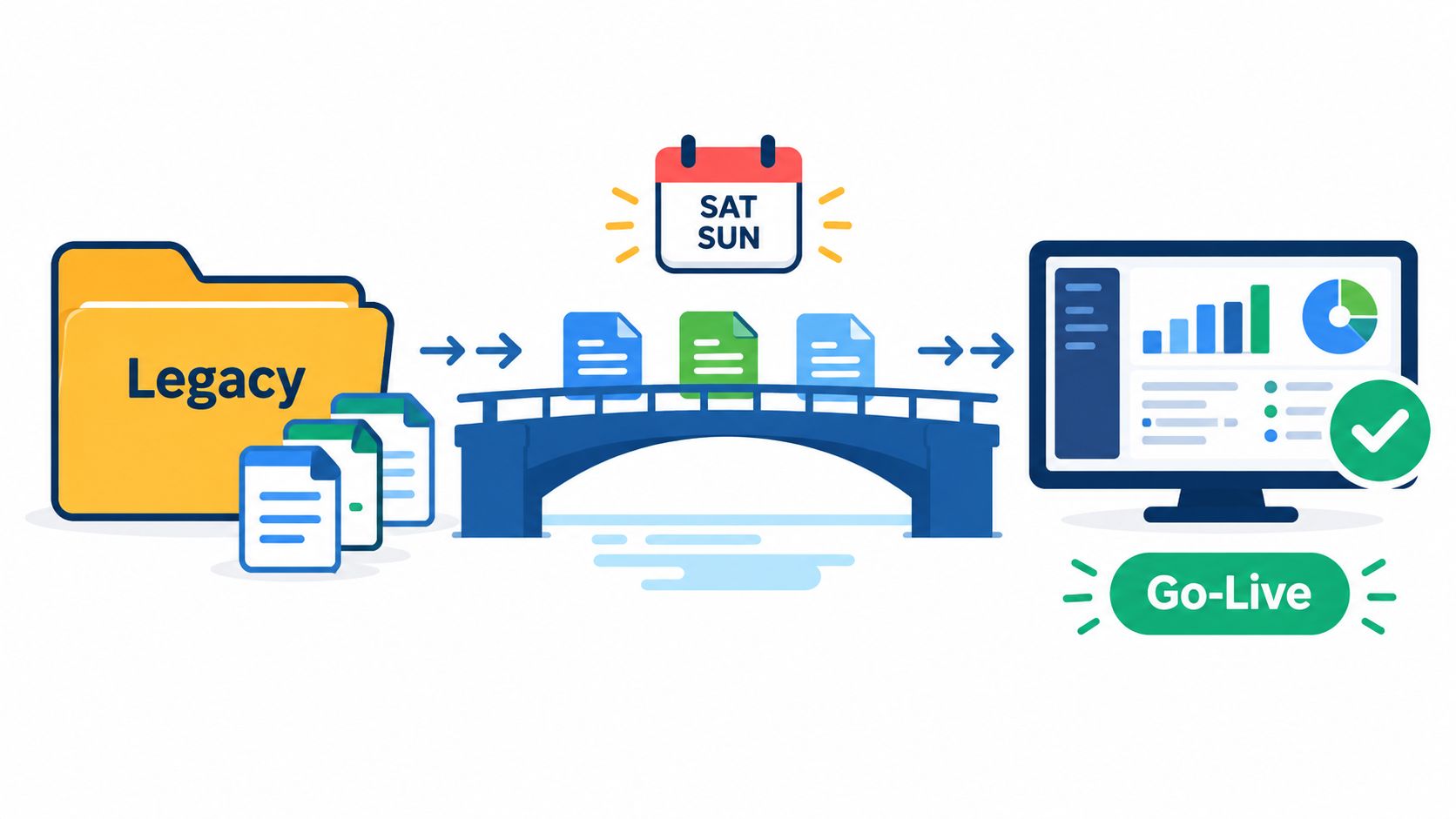
A sound cutover plan ties the first seven phases together into one controlled finance handoff. It should name the final data loads, opening balance sign-off, user provisioning, approval activation, report validation, integration checks, support staffing, and the conditions that would delay go-live. CFOs should ask a simple question before approving the switch: who signs off on each item, and what evidence proves it is done?
This phase exposes trade-offs that leadership has to make explicitly. A weekend cutover reduces the period of dual maintenance, but it leaves little room to correct defects before users log in. Parallel operations can lower risk for selected processes, but they increase reconciliation work and often confuse ownership. A phased entity rollout may suit a DSO or multi-location healthcare group, while a nonprofit with heavy grant reporting may prefer one controlled conversion after fund and restriction balances are validated.
Data migration discipline matters as much as the cutover calendar. Teams moving from QuickBooks often discover that years of flexible posting habits, weak customer or vendor naming standards, and spreadsheet side ledgers do not convert cleanly into a structured ERP. That is why many finance leaders use specialized QuickBooks data migration services to map history, clean master data, and avoid bringing old reporting problems into the new system.
The cutover room should stay small and accountable. Finance leadership owns reconciliation and go-live sign-off. IT or the technical lead owns environments, access, and interface timing. Operations confirms the business can keep serving patients, donors, clients, or practice locations during the switch. The implementation partner runs the checklist, timestamps decisions, and escalates gaps before they become production issues.
The final deliverable in phase 8 is not a migrated database. It is a documented decision that the organization can transact, close, and report in the new ERP with acceptable risk on day one. For a broader project control lens, the Project Management Institute also outlines practical principles in its overview of project risk management.
9. Phase 9 Hypercare & Stabilization
At 8:15 on the first business day after go-live, the project becomes a finance operating model test. AP is trying to release payments, department leaders want reports, and the controller is asking whether the trial balance, subledgers, and bank activity still reconcile under live transaction volume.
Hypercare is the controlled support period immediately after launch. Its job is to protect trust in the new ERP while the organization proves it can transact, close, and report without workarounds taking over again. Stabilization starts when issue volume drops, ownership is clear, and finance no longer needs a war-room response to get through normal work.
What good post-launch support looks like
Post-launch support should not run like a generic ticket queue. Finance needs triage by business impact. A user question about screen layout does not belong in the same lane as a posting rule defect that could delay close, misstate restricted fund balances, or break provider reimbursement reporting.
The leadership question in this phase is simple. What must be fixed immediately, what can wait, and who has authority to decide? Teams that answer that well recover faster because they separate defects, training gaps, report refinements, and change requests before everything turns into an "urgent" issue.
A practical hypercare structure usually includes daily issue review, named owners, response targets by severity, and a short list of metrics finance leadership sees every day. Open close-blocking defects. Aging reconciliation items. Interface failures. Manual journal volume. Report requests that expose a design gap versus a one-time user misunderstanding.
The first close is a stress test.
If the first close in the new system feels chaotic, users will judge the implementation by that experience, not by how clean the cutover checklist looked. That is why experienced ERP teams treat hypercare as part of the finance transformation workflow, not as leftover project cleanup after launch.
The specific pressure points vary by organization. A healthcare provider may discover that a revenue or cash posting scenario behaves differently under actual month-end volume than it did in testing. A nonprofit may realize a board packet or grant reporting view needs different dimensions, filters, or validation steps once live transactions start posting. A DSO may find office-level deposit reconciliation is technically working but operationally too slow for practice managers. An SMB finance team coming off QuickBooks often sees the same pattern. The system is posting correctly, but users still need help adjusting to tighter approval paths, cleaner period controls, and less spreadsheet correction outside the ERP.
Good hypercare produces clear deliverables, not just activity. Finance should expect a live issue log with severity definitions, a daily decision cadence, documented workarounds for approved temporary fixes, and exit criteria for stabilization. If Lucentive or another implementation partner is involved, this is also the phase where partner accountability should be visible. Who is resolving defects, who is retraining users, who is updating reports, and who signs off that a fix is complete.
The exit test for Phase 9 is operational, not ceremonial. Finance can complete routine transactions, reconcile key accounts, run required management and statutory reports, and close with acceptable control and effort. Once that standard is met, the organization is ready to refine for value instead of just holding the system together.
10. Phase 10 Optimization & Process Refinement
Three weeks after go-live, the pressure shifts. Finance is no longer asking whether invoices post or whether the close can finish at all. Leadership is asking whether the new ERP is reducing manual effort, tightening controls, and giving managers better visibility than the old QuickBooks files, side spreadsheets, or disconnected legacy tools ever could.
Phase 10 is where an implementation starts acting like a finance transformation program. The goal is to improve how work gets done across close, approvals, reporting, reconciliation, and operating review, using what the team learned in live production.
The first live design is rarely the final design. Good teams know that. They make deliberate launch compromises to protect the timeline, reduce cutover risk, and avoid loading too much change onto AP, payroll, grants accounting, revenue cycle, or office managers at once. Optimization is the point where leadership decides which of those compromises should stay, which should be fixed, and which should be retired.
That requires evidence.
Finance should review a defined set of outcomes against the case for change established earlier in the project. For a healthcare organization, that may mean fewer manual journal entries tied to cash posting, cleaner department reporting, or faster reconciliation of payer activity. For a nonprofit, it may mean fund reporting that board members can use without offline manipulation. For a DSO, it may mean shortening office-level deposit reconciliation and reducing the amount of controller review needed before close. For an SMB team leaving QuickBooks, the target is often simpler but no less important: fewer spreadsheet-based corrections, stronger approval discipline, and a close process that does not depend on one person knowing all the workarounds.
A useful optimization review usually produces four concrete outputs:
- A prioritized improvement backlog: ranked by business value, control impact, and implementation effort
- A root-cause view of recurring friction: where users are slowing down, bypassing process, or creating manual fixes
- An updated ownership model: who approves changes, who tests them, and who measures whether they helped
- A value scorecard: close timing, exception volume, report usage, approval cycle time, and other operating measures tied to the original business case
The best teams do not fill this backlog with cosmetic requests. They focus on the issues that affect finance capacity and decision quality.
Examples are usually easy to spot. A hospital finance team may find that an approval chain built for control now delays routine purchasing and needs threshold changes. A nonprofit may realize that grant restrictions were configured correctly but coded inconsistently by program staff, creating avoidable cleanup work every month. A DSO may see that bank reconciliation is technically complete, yet still too dependent on central finance because practice-level roles were defined too narrowly. A growing services business may discover that project or department reporting exists, but leaders still export data to spreadsheets because the dashboard layout does not match how they review margin or utilization.
This is also the stage where partner discipline shows up in a practical way. If Lucentive is involved, finance leaders should expect structured recommendations, change impact estimates, testing steps for each refinement, and a clear distinction between defect correction, user retraining, and net-new enhancement work. Those categories affect budget, urgency, and executive attention differently.
Optimization should leave the organization with a better operating model, not just a longer enhancement list. The phase is working when month-end effort declines, reporting fits management conversations more closely, and finance spends less time correcting process exceptions after the fact.
11. Phase 11 Ongoing Support & Continuous Improvement
Six months after go-live, the test usually arrives. A controller hires two new accountants who need training. A healthcare group adds a clinic and wants cleaner location reporting. A nonprofit launches a new grant program with restrictions that did not exist during design. A DSO changes its management structure and suddenly the original approval paths no longer fit how work gets done.
Phase 11 keeps the system aligned to the business after the project team has stepped back. For finance leaders, that means assigning clear ownership for support, enhancement intake, user training, release management, and periodic review of whether the ERP still supports close, controls, cash visibility, and board reporting.
Why partner quality matters most after go-live
Vendor support can address product issues. An implementation partner should address operating reality. The difference matters to CFOs because not every post-go-live request deserves the same response. Some issues are defects. Some are training gaps. Some are design changes driven by growth, acquisitions, new service lines, or a change in reporting needs. If those categories get mixed together, support turns into a queue of tickets instead of a managed finance roadmap.
Strong post-go-live support has a few plain deliverables: a named owner for triage, response targets by issue severity, a release calendar, a change approval process, and a backlog ranked by business value. Lucentive should be expected to separate break-fix work from enhancements, estimate the finance impact of each change, define test steps before release, and document what changed so audit and internal control owners are not guessing later.
This phase also protects time-to-value. Teams that treat support as ad hoc cleanup usually drift back to spreadsheets, manual approvals, and side processes that weaken control. Teams that govern support well keep improving close speed, reporting fit, and user adoption without reopening the entire implementation.
The practical trade-off is straightforward. Tight change control reduces risk but can slow needed improvements. Loose change control speeds small requests but often creates reporting inconsistencies, role confusion, and avoidable rework. Finance leadership has to choose the right operating model for the organization's size, compliance burden, and pace of change.
Examples tend to be specific. A hospital or multi-site healthcare organization may need new dimensions, approval routing, or entity structures as locations expand. A nonprofit may need revised coding guidance and recurring training as new program managers enter the system. A DSO may need updates to provider compensation logic, intercompany rules, or practice-level access after reorganization. An SMB moving beyond QuickBooks often needs more formal support than expected because the first year after implementation usually includes role changes, reporting refinement, and stronger month-end discipline.
Phase 11 works when the ERP remains a managed finance platform instead of becoming another system that finance works around. The signs are practical: fewer recurring support issues, faster onboarding for new users, controlled releases, stable reporting definitions, and a backlog tied to business priorities rather than whoever complained last.
11-Phase ERP Implementation Comparison
| Phase | 🔄 Complexity | ⚡ Resource requirements | 📊 Expected outcomes | ⭐ Key advantages | 💡 Tips |
|---|---|---|---|---|---|
| Phase 1: Discovery & Needs Assessment | Medium–High, cross-functional interviews and process mapping | Significant time from finance leadership + implementation partner (weeks) | Clear scope, prioritized requirements, reduced scope creep | Aligns system to real business needs; early risk reduction | CFO/Controller lead; document real processes; set success metrics |
| Phase 2: Solution Design & Configuration Planning | High, blueprinting multi-entity rules and workflows | Heavy stakeholder sign‑off and documentation effort | Definitive design for build; fewer late changes | Prevents costly rework; provides executive visibility | Involve CFO; design for scale; record assumptions |
| Phase 3: Data Preparation & Cleansing | Medium, detailed data validation and reconciliation | Intensive accounting team effort and data steward (weeks) | Clean opening balances; fewer post‑go‑live issues | Establishes day‑one data credibility and audit trail | Start early; assign data steward; document transformations |
| Phase 4: System Build & Configuration | High, hands‑on setup mirroring the blueprint | Implementation partner time; finance SME for validation (4–8 weeks) | Functional system reflecting design; testable processes | Enables user familiarization; repeatable configuration | Single finance POC; test as you build; keep issue log |
| Phase 5: Integration & API Configuration | High, technical mapping across systems and middleware | Technical leads, vendor cooperation, sandbox testing | Automated data flows; reduced manual entry and reconciliation | Real‑time consistency across systems; fewer errors | Map integrations early; build error handling; test thoroughly |
| Phase 6: Testing Strategy & Test Planning | Medium, comprehensive test case creation and execution | Finance and IT test coordinators; realistic test data (2–4 weeks) | Validated processes; documented sign‑off criteria | Prevents go‑live defects; builds user confidence | Use real transactions; assign test coordinator; log defects |
| Phase 7: Training & Knowledge Transfer | Low–Medium, role‑based curriculum and hands‑on labs | Time from end‑users and trainers; sandboxes and materials | Higher adoption; fewer support calls post‑go‑live | Creates internal expertise and advocates | Role‑specific training; use the live system; schedule 3–4 weeks prior |
| Phase 8: Cutover & Data Migration | High, final migration, reconciliation and go/no‑go decision | Cross‑team coordination, weekend work, contingency resources | Successful switch to production; validated opening balances | Formal playbook reduces chaos; parallel run safety net | Build cutover playbook 4+ weeks ahead; designate steering committee |
| Phase 9: Hypercare & Stabilization | Medium, intensive post‑go‑live support and fixes | Dedicated support team, daily standups (2–4 weeks) | Rapid issue resolution; stabilized operations | Accelerates adoption; addresses real‑world gaps | Define scope/duration; set SLAs; log resolutions |
| Phase 10: Optimization & Process Refinement | Medium, analyze usage and implement targeted improvements | Super‑user involvement and prioritized enhancement backlog | Additional efficiency gains (often 20–30%) | Improvements based on real usage; scalable processes | Schedule review 3–4 months post‑go‑live; measure impact |
| Phase 11: Ongoing Support & Continuous Improvement | Low–Medium, long‑term change management and updates | Ongoing support contract, periodic reviews, super‑user development | System remains aligned with business; reduced technical debt | Sustains ROI and enables new capabilities | Define SLAs; prioritize backlog; conduct annual strategy reviews |
Turn the 11 Phases Into a Finance-First Decision
If your close is slow, your entities are fragmented, reporting depends on spreadsheets, or audit prep keeps exposing weak controls, the 11 phases of ERP implementation should be treated as a finance leadership framework, not an IT project plan. Each phase asks for a business decision. What problem are you solving? What process should the system enforce? Who owns the data? What must be tested before go-live? How will users adopt the new workflow? What support exists after launch?
That's the lens I'd use in a partner evaluation.
Start with discovery quality. A good partner won't rush you into software enthusiasm. They'll push for clarity on close pain, reporting gaps, approval issues, and entity complexity. Then look at design discipline. Can they turn your requirements into a finance operating model with clean dimensions, approvals, reporting structure, and scalable logic?
Data ownership comes next. If no one on your side owns cleansing and reconciliation, migration risk is already rising. Integration readiness matters just as much. Healthcare groups need EMR and revenue workflows to land cleanly in finance. Nonprofits need donor, grant, and fund flows to stay accurate. DSOs and multi-site businesses need location-level operations tied back to reliable consolidated reporting.
Testing evidence is another dividing line. Ask how the partner proves the close, approvals, reports, consolidations, and integrations work before launch. Then ask how they handle training. Software alone doesn't create adoption. The right partner builds confidence in the people using the system, especially the controllers, finance managers, and operational owners who carry the new process every day.
Cutover controls and hypercare coverage deserve more scrutiny than they usually get. Plenty of ERP content treats deployment like the finish line, but that's where many finance teams first feel the strain. The partner you choose should have a real go-live process, a real issue-management approach, and a clear path from hypercare into stable support.
Optimization planning and ongoing support close the loop. A practical implementation acknowledges that some decisions belong before launch and others belong after users have real experience in the system. That's normal. What matters is whether the partner has the finance depth and implementation discipline to keep improving the environment instead of disappearing after go-live.
Sage Intacct may be the platform that fits your organization, especially if you need stronger multi-entity reporting, cleaner controls, role-based visibility, and a better path beyond QuickBooks. But software alone isn't the decision. The partner, the implementation method, and the post-launch support model determine whether the system becomes a finance advantage or just another tool your team works around.
If you're evaluating ERP options or trying to decide how to approach a Sage Intacct rollout, this is the right moment to pressure-test your assumptions. A short working session can reveal whether your timeline, data readiness, reporting model, and internal ownership are strong enough to support a successful implementation. For finance leaders who want that conversation grounded in mid-market reality, Lucentive is one relevant option to consider.
Summary
The 11 phases of ERP implementation work best when leadership treats them as a connected finance transformation, not a software install. Discovery, design, data preparation, build, integration, testing, training, cutover, hypercare, optimization, and ongoing support each reduce a different type of risk. The common failure points are familiar: weak governance, poor data ownership, rushed testing, low user adoption, and underweighted post-go-live support. For CFOs, controllers, and CEOs moving beyond QuickBooks, the decision is not just platform selection. It's whether the implementation approach will improve close speed, reporting control, visibility, and long-term system fit.
Frequently Asked Questions
How long do ERP implementations usually take?
Implementation time depends on scope, company size, integrations, and how disciplined the project stays. One benchmark based on 306 published case studies found a median implementation duration of 6 months, with the middle half of projects finishing between 3 and 9 months. Another implementation guide places many mid-market projects in a 6 to 12 month range. The practical takeaway is that timelines vary, and finance readiness has as much impact as software selection. For additional planning context, Panorama Consulting Group also outlines common ERP implementation timeline expectations.
Why do so many ERP projects struggle?
The pattern has been consistent for years. Independent summaries report that roughly half to three-quarters of ERP projects exceed budget, timeline, or expected benefits, depending on how failure is defined. Recent commentary also points to familiar causes: weak leadership commitment, underestimated organizational change, poor data migration, inadequate training, and scope creep. In practice, projects usually struggle because governance and adoption break down before the software itself does. For another practical overview of common causes, NetSuite also breaks down why