Your month-end inventory balance can tie perfectly while your gross margin still surprises the board. The difference often starts with cost flow. The same physical stock, purchases, and sales can produce different COGS, taxable income, ending inventory, and audit questions depending on the method your team applies.
That creates a familiar CFO problem: finance spends days rebuilding inventory schedules, controllers explain margin movements auditors can't trace quickly, and operating leaders make decisions from costs that don't reflect how the business buys or uses stock. The four inventory costing methods, specific identification, FIFO, LIFO, and weighted-average cost, give you a practical decision set, but the choice needs to fit your inventory, reporting framework, tax position, and control environment.
The examples below use clearly labeled illustrative purchase sequences. Sage Intacct can enforce the selected method through controlled configuration, real-time valuation views, and a clean audit trail across entities, provided the implementation design matches how your business receives, moves, and sells inventory.
Table of Contents
- 1. FIFO First-In, First-Out for Perishable and Time-Sensitive Inventory
- 2. LIFO Last-In, First-Out for Rising-Cost Environments
- 3. Weighted-Average Cost for Stable Operations
- 4. Specific Identification for High-Value and Specialized Items
- 4-Way Inventory Costing Comparison
- Choosing the Method and the Partner Behind It
- Summary
- Frequently Asked Questions
- What are the four inventory costing methods?
- How does FIFO affect margin and inventory during rising prices?
- Why do companies choose LIFO?
- When is weighted-average cost appropriate?
- When should a company use specific identification?
- Can a multinational group use different costing methods?
- What does Sage Intacct need to support inventory costing?
1. FIFO First-In, First-Out for Perishable and Time-Sensitive Inventory
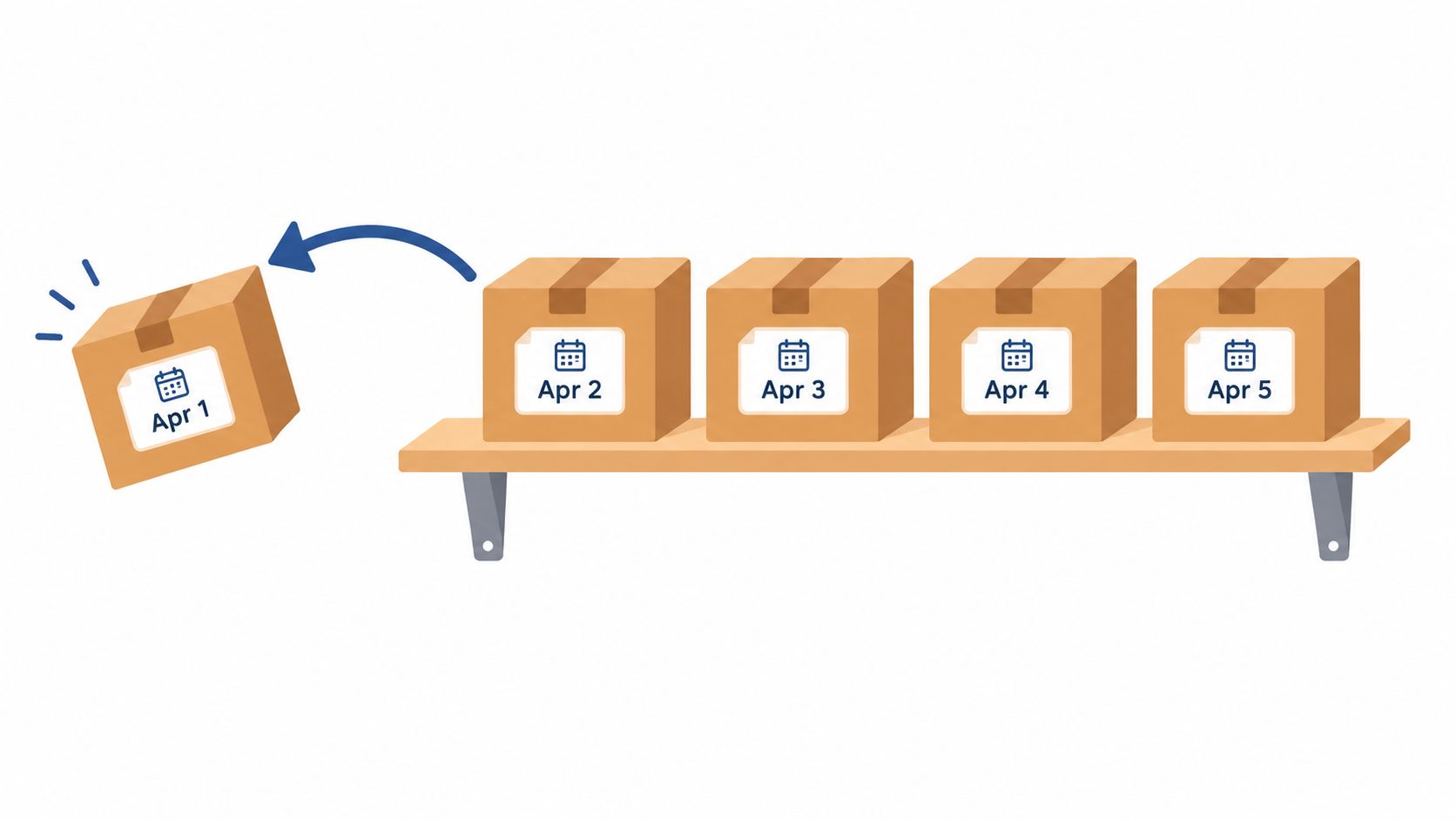
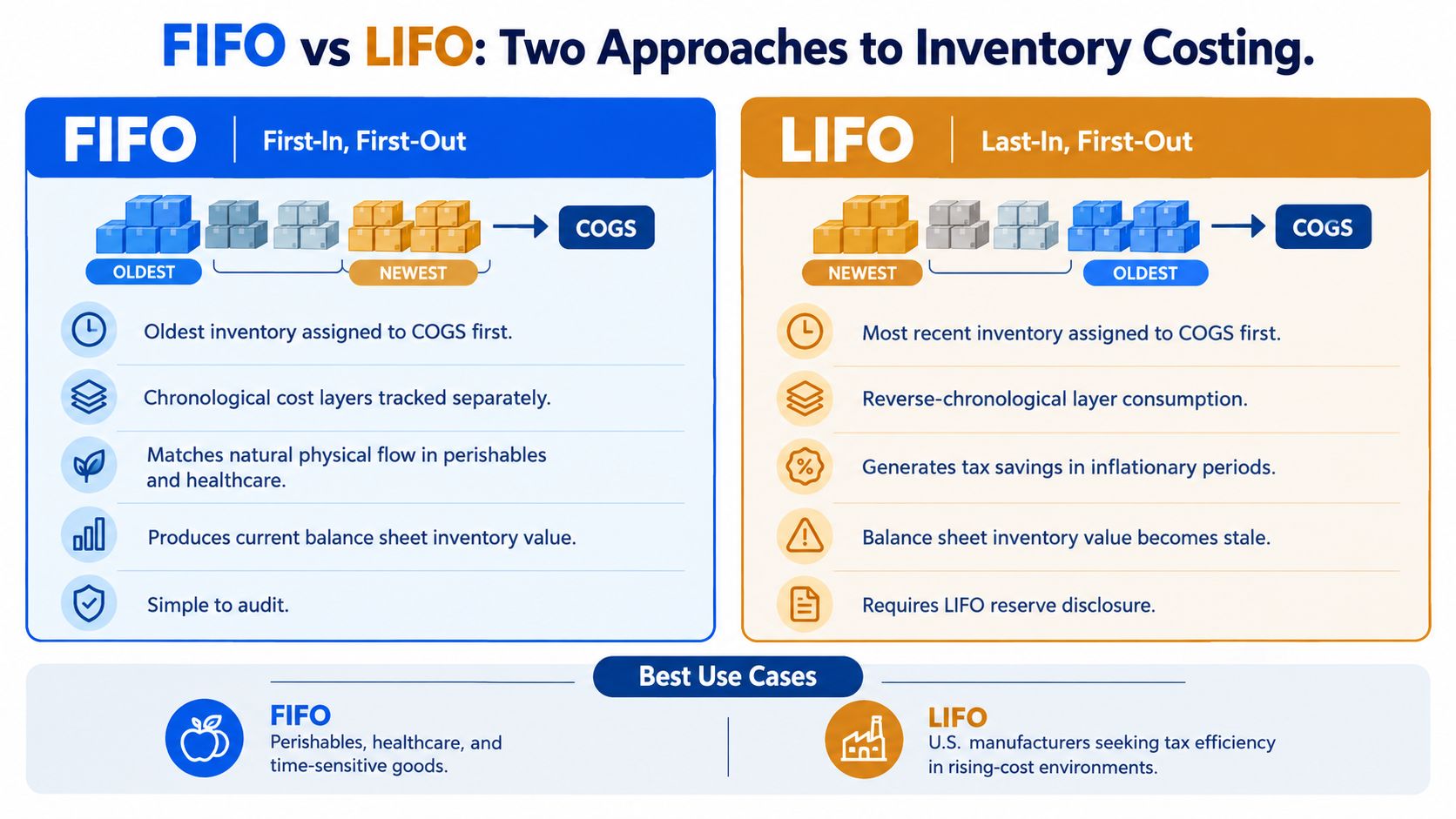
FIFO assumes the earliest purchased units are sold or used first. In a period of rising prices, that generally sends older, lower costs to COGS and leaves newer, higher costs in ending inventory. The result is often higher reported gross profit and a higher inventory balance than LIFO, even though the physical goods sold are identical.
That makes FIFO intuitive for a healthcare provider managing medications, a pharmacy tracking shelf life, or a food program distributing supplies in receipt order. The accounting assumption also supports a sensible operational discipline. Teams can rotate older stock first and reduce the risk that expiration dates, seasonal demand, or slow warehouse movement turn usable inventory into waste.
FIFO is permitted under both U.S. GAAP and IFRS. Under IAS 2 Inventories, FIFO is one of the accepted cost formulas for ordinarily interchangeable inventory. That matters for organizations with international subsidiaries, grant reporting requirements, or a parent company preparing IFRS consolidation. A U.S. entity may have more choices, but a global finance team needs a method it can explain consistently across reporting bases.
What FIFO demands from the close
In Sage Intacct, FIFO uses layer-based cost tracking. Each receipt creates a distinct cost layer, and the system consumes those layers in chronological order as inventory is sold or used. That gives the controller a trace from the COGS entry back to the receipt and vendor invoice, but only if receiving and location controls are reliable.
For a multi-site clinic, applying FIFO per location can expose a problem that a company-wide average would hide. Stock may exist in the ledger, but the wrong location may be consuming the wrong layer. Use the Sage Intacct wholesale distribution capabilities as part of a broader design that connects receiving, inventory movement, valuation, and the general ledger.
Practical controls include:
- Capture lot details at receiving: Assign a unique lot or batch number so each purchase layer traces back to the vendor invoice.
- Review valuation monthly: Use the Inventory Valuation report to identify unusual layer consumption, negative quantities, or unexpected cost movements.
- Audit high-value items: Sample controlled or expensive supplies and verify that the system consumed the oldest eligible layer first.
- Separate physical and accounting controls: FIFO is a cost-flow assumption, while expiration, lot requirements, and customer specifications may determine the actual picking sequence.
Practical rule: FIFO works best when the finance assumption and warehouse discipline tell a consistent story.
The trade-off is tax exposure during inflation. Because older, lower costs generally flow to COGS first, taxable income may be higher than under LIFO. CFOs should therefore model margin, cash taxes, and ending inventory together rather than selecting FIFO solely because it feels operationally natural.
2. LIFO Last-In, First-Out for Rising-Cost Environments
LIFO assigns the newest inventory costs to COGS first. When purchase prices rise, those newer costs are generally higher, so LIFO tends to increase COGS and reduce taxable income relative to FIFO. That can make LIFO attractive to a U.S. company with interchangeable inventory, rising input costs, and a clear tax-planning rationale.
The cost is visible in the balance sheet. Older cost layers remain in ending inventory, which can leave the recorded inventory value less reflective of current replacement costs. Reported earnings may also be lower than under FIFO during inflation. LIFO can improve the matching of recent costs with current revenue, but it doesn't change the physical quantity of stock or make purchasing decisions better by itself.
LIFO has a specific U.S. regulatory position. It was approved for U.S. tax use through the Revenue Act of 1939, and Internal Revenue Code Section 472 establishes a conformity principle. A taxpayer generally electing LIFO for federal income-tax reporting must also use LIFO in relevant financial statements, subject to the applicable rules, typically through IRS Form 970. The IRS also requires documentation that the taxpayer used no other inventory method to determine income, profit, or loss in the first year of adoption in reports provided to shareholders, lenders, or other stakeholders. IRS guidance on LIFO conformity explains why this is a reporting and compliance decision, not a private bookkeeping preference.
Where LIFO creates operating friction
LIFO isn't permitted under IFRS. IAS 2 allows FIFO or weighted-average cost for ordinarily interchangeable inventory, but not LIFO. A U.S. subsidiary may use LIFO for local GAAP or tax reporting, while an IFRS-reporting parent must convert the results for consolidation. That can require reconciliation schedules for inventory layers, COGS, deferred tax effects, margins, and opening balances. It also creates a risk that local reporting, management dashboards, and group reporting use different cost views without clear explanations.
Sage Intacct configuration should therefore be designed around the reporting entity, jurisdiction, and consolidation process. Reverse-order layer consumption, reserve calculations, and year-end adjustments need documented ownership. A Sage Intacct distribution ERP approach can support the system design, but the tax adviser and controller still need to approve the policy.
Use disciplined controls before adopting LIFO:
- Get tax advice first: Confirm that the expected tax effect justifies the added compliance and reconciliation work.
- Define pools carefully: Decide whether locations or similar inventory should share pools, with tax consequences documented.
- Monitor the reserve: Review LIFO reserve movements monthly and investigate sudden changes or possible layer liquidation.
- Preserve evidence: Archive layer support, elections, calculations, and reconciliations for the period required by your tax and audit advisers.
LIFO fits stable U.S. operations better than businesses preparing for international expansion. If an acquisition, IFRS parent, or cross-border reporting requirement is likely, the conversion burden may outweigh the tax benefit.
3. Weighted-Average Cost for Stable Operations
Weighted-average cost blends the total cost of goods available for sale across the total number of units. The system applies one average unit cost to units sold and units remaining. In a perpetual environment, the average can be recalculated as new inventory arrives, creating a moving cost that smooths purchase-price changes instead of preserving separate FIFO or LIFO layers.
That middle position is the method's strength. A manufacturer buying interchangeable components from several vendors can report a consistent cost without asking warehouse staff to identify the exact receipt consumed by every production order. A food processor, professional services firm with material inventories, or healthcare group with stable purchasing patterns may value that simplicity more than lot-specific margin precision.
Weighted-average cost is permitted under both U.S. GAAP and IFRS. Under IAS 2 Inventories, weighted average is an accepted cost formula for ordinarily interchangeable inventory. It also fits organizations planning international expansion or multi-entity consolidation because it avoids the IFRS restriction that applies to LIFO. Sage Intacct uses weighted-average costing as its default method, so the initial configuration burden is generally lighter than a layer-based or serial-level design.
The control point is receiving accuracy
Weighted average reduces administrative complexity, but it makes receiving data especially important. An incorrect quantity, unit cost, freight allocation, or receipt date can flow into the average applied to later issues. The error may not be obvious because the resulting cost looks reasonable.
For a growing manufacturer, Sage Intacct discrete manufacturing can connect purchasing, inventory, production, and ledger reporting, but the implementation still needs clear receiving ownership. Finance should reconcile inventory quantities and values at least quarterly, investigate shrinkage and receiving differences, and resist manual overrides that conceal supplier-price trends.
A practical operating rhythm includes:
- Validate every receipt: Confirm quantity, unit cost, vendor, and location before posting.
- Review valuation reports: Look for slow-moving stock, unusual average-cost changes, and items whose accounting cost no longer supports management decisions.
- Separate accounting from replenishment analysis: Weighted average supports financial reporting, but buyers may still need current replacement costs for pricing and purchasing.
- Train warehouse teams: Accurate scans and receiving entries protect the cost calculation more effectively than late spreadsheet corrections.
The weakness is loss of detail. Weighted average can hide a high-cost lot caused by expedited freight, shortages, or another exceptional purchase condition. It may also respond slowly when supplier prices change sharply. That isn't a defect for genuinely interchangeable goods, but it becomes a problem when management needs lot-level profitability, regulatory traceability, or exact customer-order costing.
For companies moving from QuickBooks, the appeal is clear: the method is easier to explain, easier to reconcile, and less dependent on manual layer maintenance. The finance team should still test the method against actual purchasing patterns before standardizing it across entities or warehouses.
4. Specific Identification for High-Value and Specialized Items
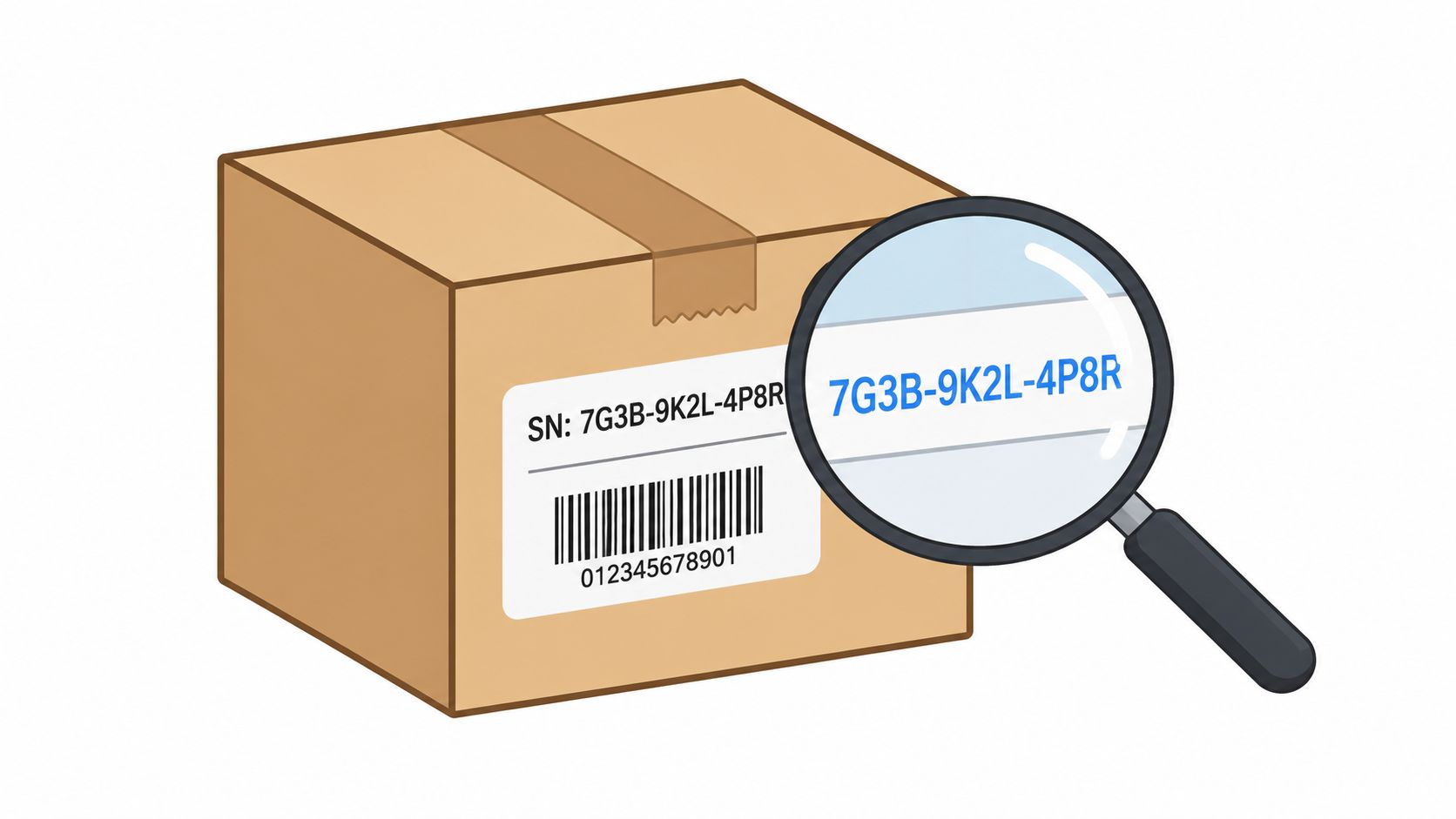
Specific identification assigns the actual acquisition or production cost to the identifiable item sold or used. There is no assumption that the oldest, newest, or average unit left the business. Under IAS 2, this approach is used for items that are not ordinarily interchangeable or are segregated for specific projects. The cost in COGS follows the exact serial number, lot, project, or other identifier recorded on the transaction.
That precision matters when the units aren't interchangeable. A surgical center may need to track a high-cost implant, a dental service organization may resell specialized equipment, and a medical device distributor may need to connect a lot to its purchase documentation and expiration information. The same logic applies to customized tools, specialized equipment, jewelry, diamonds, or unique project inventory, especially where unique item traceability supports defensible costing.
The method is also appropriate for nonprofit organizations tracking donated or grant-funded equipment and faith-based organizations managing distinctive religious art or ceremonial items. For these assets, a blended cost can obscure the funding source, acquisition history, or actual margin. Specific identification gives the controller a defensible record, but only when the organization maintains the underlying identifiers.
Precision has a data cost
Sage Intacct can support specific identification through serial-number tracking and controlled cost assignment when an item is sold or used. The design needs to cover receiving, transfers, adjustments, returns, sales, and write-offs. A serial number that disappears during a warehouse adjustment is more than an operations issue. It can break the link between the physical item, COGS, inventory value, and audit evidence.
Use specific identification selectively. FIFO or weighted average is usually more scalable for low-value, interchangeable consumables. A fixed asset management option for QuickBooks users may help frame the broader control conversation, but inventory and fixed assets still require distinct accounting policies.
Controls that justify the method include:
- Scan at receipt: Use barcode or RFID capture where practical because manual serial entry is error-prone.
- Control unusual movements: Alert on bulk adjustments, deletions, transfers, or repeated serial-number corrections.
- Train every handoff: Receiving, warehouse, sales, and finance teams must understand why the identifier matters.
- Count high-value items: Perform periodic physical audits and reconcile each item to the system record and cost history.
Specific identification produces the most direct margin information for unique items, but it demands the strongest operational discipline. If staff can't maintain serial or lot traceability, the method's theoretical precision won't survive the close. The right question isn't whether exact costing sounds better. It's whether the organization can maintain evidence from purchase through sale.
4-Way Inventory Costing Comparison
| Method | Implementation Complexity 🔄 | Resource Requirements ⚡ | Expected Outcomes ⭐ / 📊 | Ideal Use Cases 📊 | Key Advantages 💡 |
|---|---|---|---|---|---|
| FIFO (First-In, First-Out) | Moderate, layer-based config; enable lot/expiration tracking | Low–Moderate, lot fields, barcode/RFID optional; periodic reconciles | ⭐⭐⭐, Reduces waste/obsolescence; more current inventory value on balance sheet | Perishables, healthcare, pharmacies, food service, multi‑location retail | Matches physical flow; easy to audit; minimizes write‑offs |
| LIFO (Last-In, First-Out) | High, reverse layer consumption; LIFO reserve and year‑end adjustments | High, reserve accounting, monthly reconciliations, tax advisor involvement | ⭐⭐⭐, Tax deferral in inflation; higher COGS; balance sheet can become stale | U.S. manufacturers and entities prioritizing tax efficiency (U.S. GAAP only) | Tax savings in rising-cost environments; smooths earnings using current costs |
| Weighted Average Cost | Low, default in Sage Intacct; minimal setup | Low, accurate receiving data; routine reconciliations | ⭐⭐, Smooths price volatility; globally accepted (GAAP & IFRS) | Mid‑market manufacturing, food processing, companies with stable purchases, multi‑entity operations | Simple, low maintenance; audit-friendly; no layer reserves |
| Specific Identification | High, serial/unique ID enablement; per‑item cost assignment | Very High, barcode/RFID, integrations, disciplined receiving/sales processes | ⭐⭐⭐⭐, Exact cost-to-revenue matching; full traceability and audit trail | High‑value or unique items: implants, medical devices, jewelry, specialized equipment | Most accurate costing; strong compliance and traceability for high‑value inventory |
Choosing the Method and the Partner Behind It
The method that works for a food pantry may be wrong for a medical device distributor. FIFO can align with age-sensitive inventory and produce newer ending-inventory values during rising prices. LIFO can match newer costs with current revenue and reduce taxable income in inflationary periods, but it brings U.S. conformity obligations and cannot remain the costing method under IFRS. Weighted average simplifies interchangeable inventory and smooths price changes. Specific identification gives exact item-level COGS, but only when serial, lot, or project controls are reliable.
Your decision should start with four questions. What inventory do you hold? Which accounting framework and tax jurisdictions apply? How much margin and tax volatility can the business accept? Can your ERP and operating teams produce the reconciliation evidence every month? The answer may differ by reporting entity, especially when a U.S. subsidiary uses LIFO and an IFRS parent needs a controlled conversion for consolidation.
Software alone won't resolve those questions. It can apply a cost-flow rule, post COGS, show valuation, and preserve transaction history. The implementation determines whether item masters, locations, lots, serial numbers, approval workflows, reporting dimensions, and consolidation schedules work together. A poor design can automate the wrong policy faster. A disciplined design can replace spreadsheet reconstruction with repeatable close procedures and real-time dashboards.
Lucentive is a Sage Intacct National Premier Partner with experience serving mid-market organizations, including healthcare and nonprofit teams. Its role is to connect the costing policy to the way your organization receives inventory, manages locations, reports across entities, and prepares for audit. That partner work matters when you're moving beyond QuickBooks and need more than a software demonstration.
Schedule a 30-minute working session with the Lucentive team to review your inventory profile, reporting framework, tax considerations, and Sage Intacct fit before you choose a method or buy software alone.
Summary
The four inventory costing methods are specific identification, FIFO, LIFO, and weighted-average cost. FIFO generally sends older costs to COGS, while LIFO sends newer costs first and can reduce taxable income during inflation, subject to U.S. conformity rules. Weighted average blends costs for interchangeable inventory and supports simpler administration. Specific identification assigns actual costs to identifiable items and requires strong serial, lot, or project controls. The right choice depends on inventory behavior, reporting framework, tax position, and the quality of your ERP and reconciliation processes. For readers comparing formal guidance, see the FASB inventory topic overview, the IFRS IAS 2 standard hub, and the IRS inventory publications and forms page.
Frequently Asked Questions
What are the four inventory costing methods?
The four methods are specific identification, first-in-first-out, last-in-first-out, and weighted-average cost. FIFO assigns the earliest costs to goods sold, LIFO assigns the latest costs, weighted average applies a blended unit cost, and specific identification assigns the actual cost of the identifiable item sold. The appropriate method depends on whether inventory is interchangeable, how costs change, which accounting framework applies, and what traceability the business can maintain.
How does FIFO affect margin and inventory during rising prices?
When purchase prices rise, FIFO generally places older, lower costs in COGS and newer, higher costs in ending inventory. That commonly produces higher reported gross profit and a higher inventory balance than LIFO. FIFO can also align with the operational rotation of perishable or time-sensitive stock, although the accounting cost-flow assumption and the physical picking process remain distinct controls.
Why do companies choose LIFO?
Companies may choose LIFO because assigning newer, often higher costs to COGS during inflation generally increases COGS and reduces taxable income relative to FIFO. The method can also better match recent costs with current revenue. However, LIFO can leave older cost layers in ending inventory, requires U.S. conformity between tax and relevant financial reporting, and isn't permitted under IFRS.
When is weighted-average cost appropriate?
Weighted-average cost is useful for large quantities of interchangeable inventory purchased at different prices. It applies one blended cost to units sold and units remaining, which smooths short-term price changes and reduces layer-maintenance work. It works well for stable operations, but it can hide unusual lot costs and may not provide enough detail for high-value, customized, or heavily regulated inventory.
When should a company use specific identification?
Specific identification fits high-value, customized, unique, serialized, or project-specific inventory. Examples include implants, specialized devices, distinctive equipment, jewelry, and customized tools. The method assigns the actual cost of the item sold or used, but it requires reliable serial, lot, or project tracking from receipt through sale. It usually isn't practical for large volumes of low-value, interchangeable consumables.
Can a multinational group use different costing methods?
A group may need different local methods because U.S. GAAP permits LIFO while IFRS prohibits it. A U.S. subsidiary may use LIFO for local reporting if it satisfies the applicable conformity rules, while the IFRS-reporting parent converts or reconciles the results for consolidation. The group should document policies by entity and jurisdiction and design the reconciliation before automating close and intercompany reporting.
What does Sage Intacct need to support inventory costing?
Sage Intacct needs accurate item, location, receipt, issue, lot, serial, and ledger data. FIFO requires controlled cost layers, LIFO requires documented layer and reserve processes, weighted average depends heavily on accurate receiving, and specific identification requires reliable identifiers through every inventory movement. A successful implementation also needs reporting, approvals, reconciliation, and consolidation controls that match the selected method.
Lucentive helps finance leaders evaluate inventory costing, configure Sage Intacct, and connect inventory activity to reliable COGS, valuation, dashboards, and audit trails. Schedule a practical working session by visiting Lucentive to discuss your inventory profile and whether the right partner-led implementation fits your organization.